
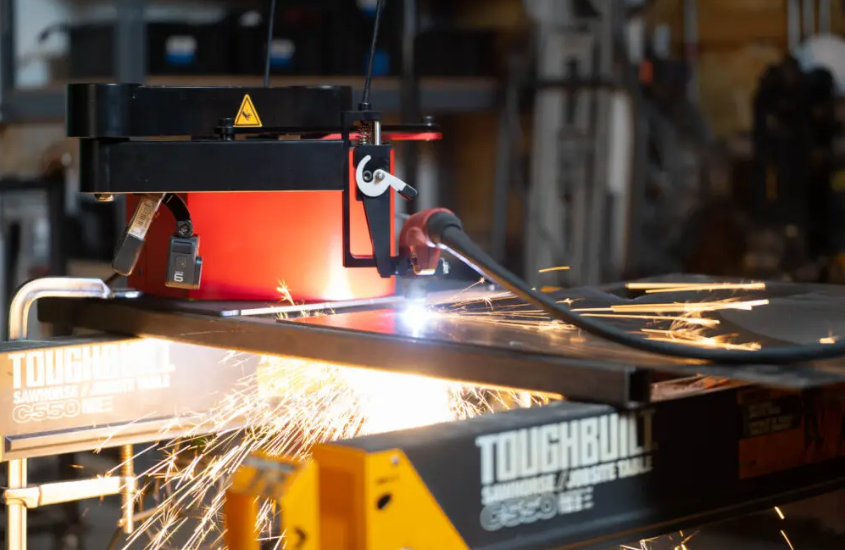
Metal fabrication used to require either a large budget or years of hands-on practice to produce clean, repeatable cuts. Small workshops, hobbyist garages, and independent fabricators often assumed that computer-controlled cutting was reserved for industrial-scale operations, the kind found in large sheet-metal plants with dedicated floor space and full-time machine operators. That assumption no longer holds. Compact, affordable CNC plasma systems have made precision metalwork accessible to shops of almost any size, changing what a one-person or two-person operation can realistically produce on a given afternoon.
Space-saving, entry-level machines now allow small operations to bring computer-guided cutting in house rather than outsourcing every job to a larger, better-equipped fabricator. A good example is ArcDroid, a compact CNC plasma robot designed for exactly this kind of workshop. Rather than requiring a dedicated CNC table spanning an entire room, tools in this category are built to sit on an existing workbench or sheet of metal, cutting complex shapes with a level of consistency that manual torch work simply cannot match. For a small shop, that shift means faster turnaround on custom brackets, signage, or replacement parts, without sending files out to a larger fabricator and waiting several days for a quote and a delivery window. It also means design changes can happen on the fly, since a revised digital file is often all that stands between a concept and a finished part.
Cost Considerations For Growing Shops
Budget is often the deciding factor for a small operation weighing new equipment. Traditional CNC plasma tables can run into tens of thousands of dollars once a cutting bed, gantry, dust collection system, and software package are all included. Smaller, robot-style plasma cutters have narrowed that gap considerably, offering much of the precision at a fraction of the up-front cost and without the need for a specially reinforced floor or a three-phase power hookup. This lower barrier to entry lets a workshop test whether digital fabrication fits its workflow before committing to a full-size, industrial setup, and it frees up capital that might otherwise go entirely toward a single large machine. Organizations like the Fabricators and Manufacturers Association track these shifts in accessible manufacturing equipment and offer useful benchmarking data for shops trying to gauge a reasonable investment relative to expected job volume.
Skill Development And Workflow Integration
Learning to operate CNC plasma equipment is far less intimidating than it once was. Modern software translates a digital design into cut paths automatically, removing much of the guesswork that used to demand years of manual torch experience and steady-handed freehand cutting. That said, safe operation still depends on solid fundamentals, proper ventilation, correct grounding, and a working understanding of how plasma arcs behave on different metal thicknesses and alloy types. Resources such as the Occupational Safety and Health Administration publish detailed, well-researched guidance on plasma cutting safety that remains relevant regardless of machine size or shop scale. Building this knowledge early helps a small crew integrate CNC plasma cutting into an existing workflow without slowing down other projects, since one operator can typically manage a compact system alongside welding, grinding, and assembly duties throughout a normal shift.
Looking Ahead
As compact CNC plasma tools continue to mature, small workshops stand to gain the most. What once required a large capital outlay and specialized floor space can now happen on a single workbench, with software doing much of the heavy lifting that used to demand years of freehand practice. For a small-scale operation weighing whether digital fabrication makes sense, the barrier to entry has rarely been lower, and the payoff, in accuracy, speed, and repeatable results, is hard to ignore.