
Range anxiety remains one of the biggest barriers to EV adoption in the UK. The fear of running out of charge, of not making it to the next stop, of being stranded on a motorway with a flat battery, it puts people off making the switch, and it keeps some existing EV drivers in a constant state of mild stress.
The good news is that most range anxiety is a driving problem, not a car problem. With the right techniques, the gap between your official WLTP range and your real-world range closes considerably — and in many cases, you’ll find you have far more range than you expected.
Earlier this year, over a 50-mile run in the BYD Atto 2, I recorded 16.6kWh per 100 miles, a feat which even had the engineers over at BYD impressed. At my overnight Octopus Intelligent rate of 5.5p per kWh, that works out to 0.91p per mile, under £1 to travel 100 miles. That figure didn’t happen by chance. It came from applying a set of techniques consistently that any EV driver can use.
None of them are complicated. None require modifications to your car. The techniques below are designed to help you get more from every charge, spend less every time you plug in, and make range anxiety a thing of the past. These techniques have not only helped me make the most of the BYD press cars we’re currently enjoying but also my own Volvo EX30. It’s not what the “watt sipper” that the BYDs are but it’s help me maximise the EX30s range and soothe my range anxiety.
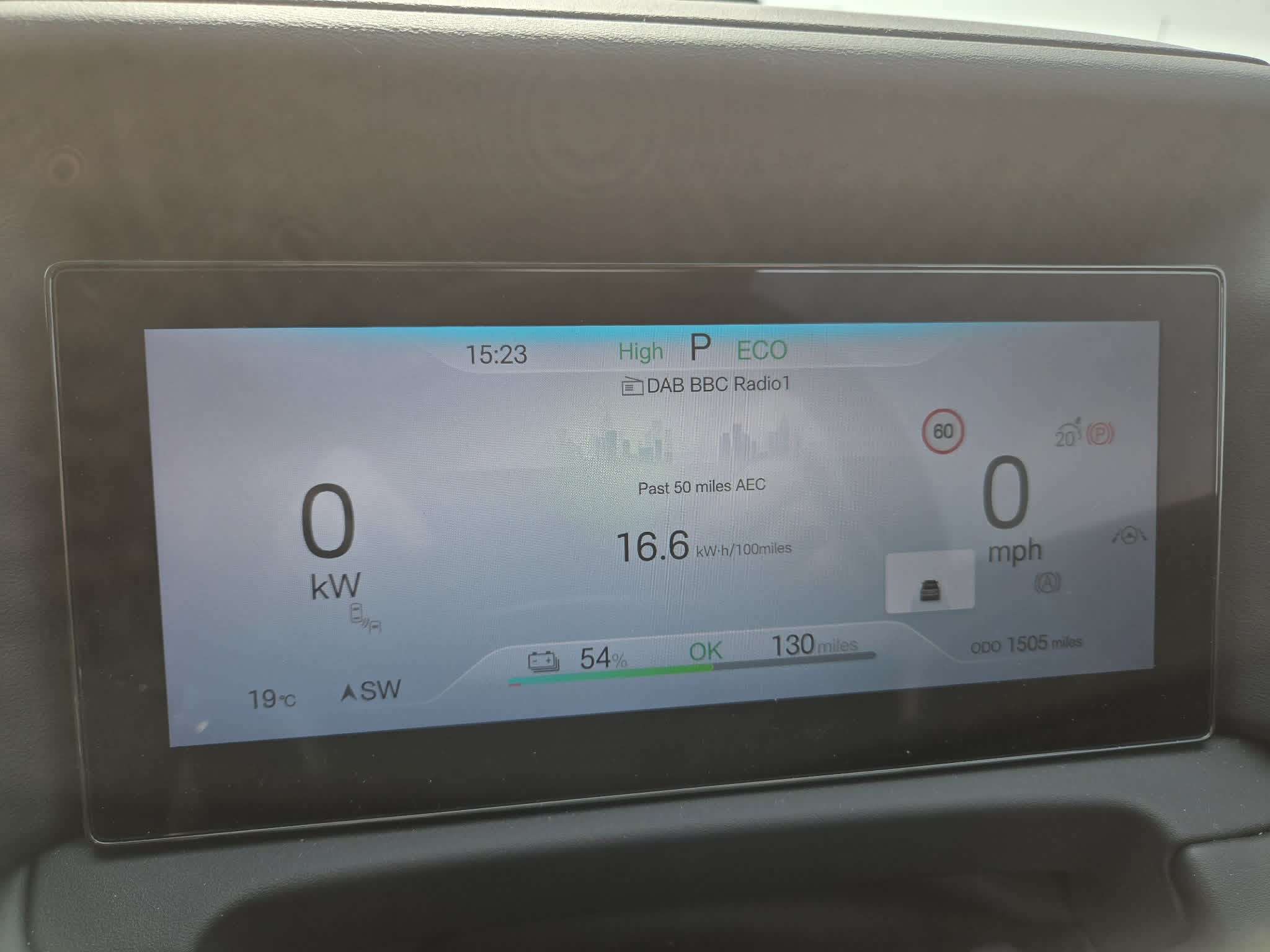
- My Recording hypermiling result in the BYD Atto 2
1. Anticipation: The Foundation of Everything
If there’s one technique that underpins everything else, it’s anticipation. Reading the road ahead and responding smoothly, rather than reacting sharply is the single biggest difference between an efficient EV driver and an average one.
Think about what happens when you brake hard. You’ve built up speed and you’re throwing it away. Even with regenerative braking recovering some of that energy, aggressive braking is always less efficient than not needing to brake at all.
In practice, this means scanning further ahead than most drivers naturally do. What’s the traffic doing 400 metres ahead, not 40? Is that junction likely to clear before you reach it? Is the car in front slowing? A driver who lifts off the accelerator early and coasts in on regen is doing something fundamentally different to one who arrives at the same speed and brakes at the last moment.
On an EV, smooth anticipation also maximises your regenerative braking. Rather than applying the friction brakes, which waste energy as heat, a long, gentle lift off the accelerator feeds energy back into the battery. Every time you do that well, you’re extending your range.
2. Speed: Higher Speeds Are Much Less Efficient
The faster you go, the harder your EV has to work to push through the air and the energy cost rises quickly. At motorway speeds, a large chunk of your battery is simply being spent fighting aerodynamic drag. Drop your speed and that drain reduces significantly.
The sweet spot for most EVs is below 50mph. Above that, efficiency starts to fall noticeably. On a motorway, sitting at 60mph rather than 70mph makes a genuine difference to your range and your cost per mile, it’s one of the simplest gains available.
Drafting
Safe drafting. Positioning your car behind a large vehicle like an HGV to benefit from the reduced wind resistance in its wake can make a surprisingly large difference to efficiency on longer journeys. The key word is safe. Always maintain at least a two-second gap (the two-second rule), and never get closer than you’re comfortable with.
Many modern EVs have radar cruise control, which makes this easier and safer. Set it to a comfortable following distance behind an HGV on a motorway and let the car manage the gap. You get the aerodynamic benefit without having to actively concentrate on maintaining distance. It’s one of those techniques that feels almost too simple but genuinely shows up in the numbers.
3. Route Planning: Work Smarter Before You Set Off
A few minutes of planning before a journey can make a meaningful difference to both your efficiency and your costs.
For shorter trips, it’s worth considering whether a slightly longer route at lower speeds is actually more efficient than the fastest route. A quieter A-road at 40-50mph will often use less energy than a motorway at 65mph, even if it adds a few minutes to the journey.
If you need to charge on route, don’t just pick the nearest charger, check the price first. Tesla Superchargers are increasingly open to non-Tesla vehicles and are often cheaper than other networks, but it’s always worth checking before you arrive as availability for non-Tesla cars varies by location. Apps like Zap-Map and Electroverse show live pricing and availability and are worth having on your phone. One more thing worth doing before any longer journey, download the charger network apps you’re likely to need and register your payment details in advance. There’s nothing more stressful than arriving at a charger with a low battery and trying to fill in your card details on sketchy WiFi or mobile data. Getting signed up at home also often unlocks better rates, so it’s worth doing even before you need it. Just be prepared for an obscene number of charging apps to riddle your phone.
Finally, and this one catches people out. Use your car’s built-in navigation even if you know the way. On many modern EVs, including BYDs, the navigation system communicates with the battery management system to pre-condition the battery before you arrive at a charging stop. A pre-conditioned battery charges significantly faster and the process is kinder to long-term battery health. It’s a feature that only works when the car knows where you’re going, so plugging in a destination you could drive in your sleep is still worth doing.
4. Temperature Controls: The Hidden Range Killer
This is the one that catches new EV drivers out most, particularly those coming from a petrol or diesel background.
In a petrol or diesel car, heating the cabin is essentially free. The engine produces waste heat anyway and the heater just redirects it. In an EV, every bit of warmth in the cabin costs battery range. Air conditioning in summer has a similar effect.
Heat pumps help significantly. The BYD Atto 2 has one as standard and it makes a noticeable difference. You can read more in our EV Heat Pump FAQ. But even with a heat pump, being thoughtful about temperature controls is worthwhile.
Summer tips:
- Park in the shade wherever possible. A cool car needs far less air conditioning to reach a comfortable temperature. It’s also worth thinking ahead about where the sun will be when you leave work, not just when you arrive. A spot that’s shaded in the morning might be baking in full sun by 5pm. A couple of minutes of thought in the morning can save you getting into a car that feels like an oven and having to blast the air conditioning for the first ten minutes of your journey home.
- Use a sunshade on the windscreen when parked to keep the cabin cooler
- At lower speeds, open the windows rather than running the air conditioning
- Pre-condition the car while it’s still plugged in, so you’re using grid electricity rather than battery power to cool it before you set off
Winter tips:
- Batteries are less efficient in cold temperatures, and combined with the energy cost of heating the cabin, winter range can drop significantly — plan accordingly
- Use your garage if you have one. A slightly warmer car needs less energy to warm up and the battery starts in better condition
- If you don’t have a garage, park facing the morning sun where possible — it can help defrost the windscreen and warm the cabin with zero energy cost
- Put a jumper on before reaching for the heater. It sounds obvious but it genuinely works
- Pre-condition the car while plugged in so you set off with a warm cabin and a full battery
The EV Heat Pump FAQ – why it makes your electric car more efficient
5. Tyre Pressure: Small Numbers, Real Difference
Tyre pressure is one of the easiest efficiency gains available and one of the most consistently overlooked.
Under-inflated tyres require more energy to keep rolling. Check your pressures at least monthly and always when the tyres are cold, a reading taken after driving will be misleadingly high. Run at the higher end of the manufacturer’s recommended range for the best efficiency.
If you’re replacing tyres, it’s worth looking at low rolling resistance options. Most EVs come with them as standard for a reason, they make a measurable difference to range. Replacing worn OEM tyres with a budget alternative that doesn’t prioritise rolling resistance can quietly undo efficiency gains you didn’t even know you had.
6. Charging: Make Every Unit Count
The cost of charging varies enormously depending on when, where and how you charge. Getting this right is just as important as how you drive.
If you’re on a home EV tariff like Octopus Intelligent, you’ll be charging at a fraction of the standard rate overnight. At 5.5p per kWh (my overnight rate) the economics of EV ownership look very different to charging at 75p per kWh on a motorway rapid charger. If you haven’t already set up an EV-specific tariff, it should be your first priority.
A smart charger is essential to make the most of these tariffs. It allows automatic scheduling to charge during cheap overnight windows without you having to think about it. Most modern home chargers have this built in. If yours doesn’t, it’s worth upgrading.
Putting It Together
None of these techniques work in isolation. The real gains come when you apply all of them consistently. Anticipation keeps the car flowing. Speed management reduces energy wasted fighting the air. Route planning avoids unnecessary consumption before you’ve even set off. Temperature discipline cuts parasitic drain. Good tyres reduce rolling resistance. Smart charging keeps the cost per mile as low as possible.
Together, they’re what turned a BYD Atto 2 into a car that costs under 1p per mile to run, and what will make range anxiety a thing of the past.
These aren’t tips for obsessives. They’re habits any EV driver can build, that cost nothing to implement, and that make a genuine, measurable difference every time you plug in.
Let’s hear from you
Do you have any EV hypermiling tips you’d like to share, or have you tried any of these techniques yourself? We’d love to hear your results in the comments.