
Hypermiling is the art of driving economically and exceeding a vehicle manufacturer’s stated efficiency by modifying your driving habits and techniques.
The word “hypermiling” was added to the Oxford Dictionary in 2008, when it was named their “Word of the Year”.
The term was originally coined by Wayne Gerdes, who is considered by many in the hypermiling community to be the “father of hypermiling.” Hypermiling is a great way to save on fuel costs and also encourages safer motoring. These techniques could help reduce your fuel usage and costs by up to 40 percent — and I personally have seen a 35–40 percent increase in my MPG by using the techniques and tips below. See my Hypermiling Blog to read about my experiences.
HYPERMILING SAFELY
Before we get into the techniques, I want to address the safety concerns that have given hypermilers a lot of bad press. Hypermiling, like any other driving technique, can be dangerous if used on the wrong road or in unsuitable traffic conditions. Please always be aware of other road users and do not endanger yourself or others for the sake of saving a few miles per gallon.
We encourage safe and considerate driving at all times.
HYPERMILING BASICS
There are a few things worth sorting out before you even think about your driving style. We suggest you:
- Track your MPG. Keep detailed records of your mileage and fuel usage so you can gauge your hypermiling efforts. Use our MPG Calculator.
- Keep your car well maintained and serviced regularly. Some hypermilers opt for a thinner oil to optimise MPG — thinner oil means less energy is required to turn the engine.
- Remove excess weight — golf clubs, tool boxes, prams and pushchairs all add up.
- Check your tyre pressures. We do not recommend over-inflating your tyres, as this can cause premature wear and potential blow-outs. Low tyre pressure increases drag and reduces MPG.
- Keep the windows up. An open window causes drag.
- Keep the air-con off. Air conditioning can decrease fuel consumption by up to 10 percent in some cases.
- Remove unused roof racks or bike racks — they increase drag even when empty.
- Don’t drive in big, thick-soled shoes. They reduce the sensitivity you need at the throttle. The best hypermiling comes from feeling how the car responds to your right foot — two inches of sole doesn’t help with that. You wouldn’t see a racing driver wearing hiking boots.
COMMON HYPERMILING TERMS
- FE – Fuel Economy
- DWB – Driving Without Brakes
- FAS – Forced Auto Stop (coasting with the engine off)
- P&G – Pulse and Glide
- ICE – Internal Combustion Engine
- D-FAS – Draft-Assisted FAS (coasting with the engine off while drafting — not recommended)
HYPERMILING TOP TIPS
Here are our top 5 hypermiling driving tips:
- Don’t drive. The best hypermiling tip we could ever give. Not driving saves you 100 percent of your fuel, keeps you healthier, and saves on vehicle maintenance. Short journeys are the worst offenders — a cold engine never reaches its optimal working temperature, leading to increased wear and terrible economy.
- Drive defensively. Anticipate the road ahead. By driving reactively, you hand control of your fuel consumption — and your safety — to other drivers. Look well ahead so you’re aware of what’s coming and can anticipate changes before they happen. To do that, you need to leave adequate following distance.
- Drive Without Brakes (DWB). Every time you brake, you’re converting fuel into heat and brake dust. Lifting off early and letting the engine do the decelerating uses your car’s stored momentum and, on a modern engine, costs you no fuel at all.
- Slow down! The faster you go, the more drag and resistance acts on your car. Reducing your cruising speed by around 20mph can improve your MPG by up to 45 percent.
- Coast. Removing your foot from the accelerator when approaching a junction or red light is one of the main reasons hybrid vehicles achieve such excellent city fuel consumption. A modern engine uses no fuel at all when coasting in gear. We wouldn’t recommend coasting with the engine off, but simply lifting off early makes a real difference. Read more in our dedicated coasting techniques guide.
HOW TO HYPERMILE
Concentrate
High concentration is the key to becoming a successful hypermiler. I’d go as far as to say it requires more concentration to hypermile effectively than to drive fast. A lapse in focus doesn’t just cost you fuel economy — it puts you and others at risk. We suggest you:
- Switch your mobile off
- Turn off the radio
- Ask passengers to keep noise to a minimum
- Keep conversation to a minimum while driving
These might sound harsh, but you’ll be surprised how quickly your hypermiling efforts unravel when your mind is elsewhere.
Drive Less
Even without hypermiling, one of the most effective ways to use less fuel is simply to drive less. That could mean:
- Using public transport
- Car sharing or lift sharing (see “Slugging” below)
- Walking, cycling, or running
- Moving closer to work
Slugging
“Slugging”, “instant carpooling”, or “casual carpooling” is a term from the USA. It involves the creation of free, unofficial, ad-hoc carpool networks — often with published routes and designated pick-up and drop-off locations. During rush hour, drivers pull up to the queue for their route, call out their destination and how many passengers they can take, and depart once the car is full. A major advantage of slugging is that vehicles carrying enough passengers can use High Occupancy Vehicle (HOV) lanes, significantly cutting journey times.
Get Your Fuel for the Best Price
Using hypermiling techniques helps you get the most out of every tank, but it also pays to start with the cheapest fuel you can find. Check a site like PetrolPrices.com for the best prices in your area before setting off — it saves driving around looking for a deal.
Keep an eye out for supermarket fuel vouchers too. Many offer discounts of up to 5p per litre when you spend a certain amount in store. Just make sure you’re buying things you actually need. That 5p per litre saves you around £2.50 on a typical 50-litre fill.
Choose the Right Route
The shortest route isn’t always the best when you’re hypermiling. Smooth, uninterrupted driving is far more efficient than stop-start town driving. A slightly longer route that keeps you moving steadily will often beat a shorter route full of traffic lights and junctions — and your MPG will show it.
Turn It Off
If you regularly face railway crossings or queuing traffic, switch your engine off as soon as it’s safe to do so. When idling, you’re doing zero MPG. Extended idling can also contribute to engine overheating. As a rule of thumb, idling for more than 10 seconds is a waste of fuel.
Parking
Don’t waste time circling for the closest space. You’ll burn fuel looking for it, and you’ll likely find another car parked in front of you — meaning a lengthy manoeuvre just to get out.
Instead, park further away in a forward-facing spot — sometimes called “face out” parking. You can start up and drive straight off. If possible:
- Pick a spot on a slight downhill — use gravity to get moving.
- In summer, find shade so you can avoid using air conditioning.
- In winter, face your car into the morning sun to help defrost the windscreen — or better still, use a cover overnight to prevent ice forming altogether. The amount of fuel wasted by people leaving their engines running to defrost the glass is considerable.
Your Oil Matters
Keeping on top of your vehicle servicing is essential for any driver who wants their car to perform efficiently. Using a low-viscosity engine oil — within your manufacturer’s recommended specification — can improve MPG and help extend engine life by reducing internal friction. Many hypermilers opt for a high-grade fully synthetic oil for exactly this reason.
WINTER HYPERMILING TIPS
Cold weather is hard on fuel economy. Some claim it can reduce MPG by more than half. Here’s why:
- Snow, ice, rain and road grit all make the car work harder to keep moving.
- Cold reduces tyre pressure, leading to more rolling resistance and wasted fuel.
- Cold air is denser than warm air, which increases aerodynamic drag — especially at higher speeds.
- Engine and transmission oil thickens in low temperatures, requiring more energy to turn the engine over.
To minimise the cold’s impact on your fuel:
- Reduce idling. Use your garage if you have one, or cover your windscreen overnight to avoid scraping in the morning.
- Park facing the sun. Let it do the defrosting for you instead of sitting with the engine running.
- Clear snow from the car. It adds weight and drag — both work against your MPG.
- Set your alarm 10 minutes earlier. Give yourself extra time so you’re not tempted to rush on icy roads to make up for a slow start.
And always keep a warm jacket in the car during winter. Waiting for breakdown assistance for over an hour in the cold is no fun. Trust me — I know.
SUMMER HYPERMILING TIPS
In summer — or on the occasional warm days we get in the UK — heat becomes your enemy. The instinct when you get into a hot car is to open the windows or blast the air conditioning. Both cost you MPG. Here’s how to manage it:
- Park in the shade wherever possible — under trees, next to buildings, anywhere out of direct sun.
- Use a silver windscreen reflector to deflect heat when you can’t find shade.
- Leave windows slightly open if you can do so safely — it’s far better for your fuel economy than air conditioning.
- Below 40mph, open windows cause very little aerodynamic drag — still a better option than running the air-con.
- If you must use air conditioning, set it to recirculate mode. This cools the air already inside the car rather than drawing in warm air from outside — far more efficient.
- Hang a towel or sun shade in the rear windows to block direct sunlight for passengers in the back. Old-fashioned, but very effective.
HYPERMILING GADGETS
There are a number of gadgets designed to help you monitor your MPG and driving behaviour. Many plug into your car’s OBD-II diagnostics port and can read data directly from the ECU — including throttle position, air-to-fuel ratios, and speed. These can be a great way to get instant feedback on your driving.
We also have our own MPG Calculator to help you track your fuel consumption over time.
FUEL ADDITIVES
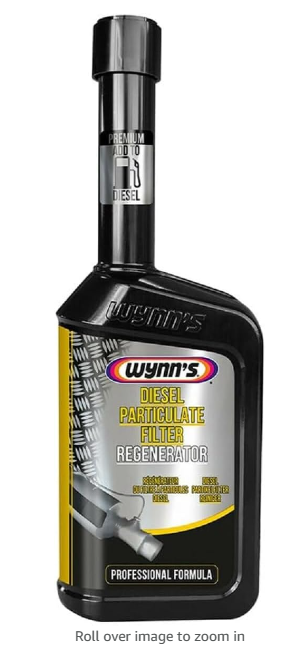
Fuel additives work by improving combustion — typically by creating a finer fuel mist. They won’t deliver the same gains as changing your driving style, but combined with the techniques on this page, they can contribute to some genuinely impressive results.
HYBRID DRIVERS
If you drive a hybrid, head over to our Hybrid Hypermiling Techniques page. That said, most of the techniques on this page still apply to hybrids — so keep reading too.
ADVANCED HYPERMILING TECHNIQUES
Coasting
There are three types of coasting, each with its own advantages and trade-offs.
In-Gear Coasting
When coasting in gear, most modern engines cut fuel injection entirely — meaning you’re using zero fuel. The engine is kept turning over by the car’s own forward momentum.
This works best when you need to come to a standstill, such as at a busy junction. Your coasting distance is shorter than in neutral due to engine braking, but you use no fuel in the process. It also keeps the car in gear at all times, giving you full control — which is why it’s considered the safest form of coasting.
Neutral Coasting
In neutral, the engine needs fuel to maintain idle revs — that’s its main downside compared to in-gear coasting. However, the absence of engine braking means you can coast much further.
This makes neutral coasting better suited to situations where you want to minimise deceleration, such as on a motorway or on a downhill stretch. Many hypermilers use it on hills to extend their coasting distance — and sometimes pick up a little extra speed in the process.
Engine-Off Coasting (FAS — Forced Auto Stop)
This involves switching the engine off while the car is still moving and rolling on momentum alone for as long as possible. It is a more extreme technique and carries real risks — it can affect braking performance and power steering response.
If you do attempt it, the safest approach is to dip the clutch, switch off the engine but leave the ignition on, and keep the car in gear. This allows you to restart quickly by releasing the clutch, and ensures your trip computer continues recording your speed and mileage correctly.
We do not recommend this technique for most drivers.
Draft-Assisted FAS (D-FAS)
The same as FAS, but performed while drafting the vehicle in front to reduce aerodynamic drag. This is an even more hazardous technique — reduced braking performance combined with a greatly reduced following distance is a very bad combination.
Please do not attempt D-FAS.
Read more in our dedicated coasting techniques guide.
Drafting
Drafting — tucking in behind another vehicle to benefit from the slipstream they create — has been used in motorsport, cycling and speed skating for decades. The principle is simple: the vehicle in front punches a hole through the air, and you benefit from the reduced resistance in their wake.
It does work. The MythBusters famously tested it and confirmed that meaningful fuel savings are possible.
However, the extreme tailgating that some hypermilers use to maximise the effect is genuinely dangerous and has brought the hypermiling community a lot of negative attention. If you want to benefit from drafting, do it safely — follow the Highway Code’s two-second rule: pick a fixed marker, and ensure you pass it at least two seconds after the car in front. In poor weather or heavy traffic, increase that gap further.
Done properly, it’s a legitimate and safe way to pick up a few extra MPG. Done badly, it’s a serious accident risk.
Check out the MythBusters drafting episode on our Hypermiling Videos page.
Ridge Riding
Ridge riding is a relatively recent addition to hypermiling terminology, and it’s primarily a safety technique. By positioning your car slightly out of the worn tyre tracks (“ridges”) left by other vehicles, you make yourself more visible to surrounding road users. It has been most widely adopted by hypermilers in the United States, but the principle applies anywhere.

Take all unused seats out of your people carrier / minivan – they are very heavy. Added bonus is that you are ready to take the occasional large load eg furniture.
I travel 24 miles to and from work along country roads and round the edge of Colchester in a 2001 Skoda Octavia 1.9 diesel with 145K miles. Usually I can average 53mpg which is great for such a big car and have just started using hypermiling techniques and managed 68.8 mpg on the way home tonight! Am I saving money? You do the Maths!
Getting an extra 15 mpg over 20k miles a year will save you around €400, hardly worth the hassle. Also the extra cost of hybrids cancel out any savings eg a Yaris hybrid is 4K dearer than a standard Yaris and @ 20k miles a year it would take 10 years before you start saving, think about it.
I hypermile commute 100 miles a day on a Honda Deauville motorbike
At 70-80mph I was getting 46mpg (not bad, but it is a bike), I slowed down to 65mph and got 55mpg.
Now I have taken it a step further, 50-55mph tops and I am seeing 65mpg. A 41% improvement, and my brakes now last 40k miles instead of 20k.
You also get to pass all the fast cars as they queue in traffic.
Good ideas, although a you are bit wooly about the ridiculously dangerous FAS. You would also be taken more seriously if you got someone to spell-check your content! Loads of spelling mistakes. Keep it up though.
Hi Chris
Thanks for the comments. FAS is dangerous but it is recongnised as a Hypermiling Technique, I do stress that safety is a big part of Hypermiling.
I’ll have a look at the spelling, its never been my strong point.
Using hypermiler methods i can now get 68-70 mpg on my peugeot 106 diesel, which is excellent, before i was getting between 50 -60 , so a vast improvement and im sav ing money !
I drive 70 miles a day in my peugeot 407 1.6 hdi in getting between 70 to 72.8 mpg I limit my self to 2000 rpm
Cool website! Can you tell me what would be more economical. Coasting to a stop with the car in gear or coasting to a stop in neutral? I just can’t fathom it out. Best Regards…
Coasting to a stop with the car in gear is best and also safest. Modern cars don’t use fuel when you do that as the engine is being kept running by the energy of you travelling along, so you gradually slow down, using no fuel. When in neutral and coasting along, the engine will be running on fuel to keep it spinning at the idle speed so it’s not as efficient.
I keep meaning to do some tests on this. I understand that coasting in neutral uses fuel and in gear doesn’t, but if I coast down a hill in neutral I get further along the flat at the bottom of the hill than if I coast in gear. So I have to get on the accelerator sooner.
Coast in a high gear so there’s less resistance from engine braking but the engine still won’t be ticking over on its own.
I’m a recent hypermiler in my S-type Jaguar 2.7D. All my driving is “urban”, and the handbook says 26mpgUK–urban, for this autobox car.
I’ve been carrying out many experiments with my car to improve mpg. apart from the well documented ones. I can say with certainty the following DON’T work:–
1) Replacing the engine oil with 0W30 from 5W30. NO difference. But changed it because a change was due — no money wasted.
2) Putting additives in the fuel. NO difference.
3) During cold weather, blocking part of the intercooler. Actually WORSE mpg.
The following made a big difference:–
1) Installing an engine sump heater with an input of around 2Kw/h. Big cold-weather difference.
2) Paying huge attention to driving techniques, especially making use of the deceleration-fuel-shut-off feature in my car. This needs explaining.
There are three engine modes, POWER, IDLE, and NO-FUEL.
Instead of driving ‘smoothly’ I use an on-off technique. I power-up to slightly faster than I want, lift off, feel the car go from “idle-mode” to “shut-off mode”. During shut-off, it feels like the brakes are being very softly applied. To regain speed, I tickle the pedal VERY softly to do this. Continuously repeat this. When going uphill, you’re mostly in POWER mode, going downhill mostly in SHUT-OFF mode. On the level, use the ‘tickling’ technique. You are looking for shut-off mode all the time, as this makes an impressive difference. THIS WORKS BEST IN URBAN HEAVY TRAFFIC.
I havn’t finished the test yet, but it’s looking like 33mpgUK, where the book says 26mpgUK. BTW, I use the fuel computer displayonly as a help. Figs. are brim-brim vs. miles covered.
Cheers.
07 merc S320 CDi – big heavy car
Normal mpg 34mpg
I drive a 170 mile round trip daily to work – mainly motorway
trying a bit of this out — 47mpg
incredible!
Glad you’re saving money Peter. You may have also noticed that hypermiling doesn’t get you around any slower. Sometimes indeed you get around slightly faster!
That fuel shut off business BTW is a lot more complicated than at !st. sight. Ford got an award for it, i.e. Fordflex. Also called agressive DFCO (decel. fuel cut-off). There is a “half-way-house” when decel. ENLEANMENT (weaker A/F ratio) is used. This is prob. what’s happening in my Ford-influenced Jaguar.
Cheers.
I am surprised all this is considered as new. My dad taught us most of these techniques back in the 60s and 70s when I was a kid. I have taken them to extreme on occasion when far from a gas station. Many friends thought I was crazy when I would shut off the engine when waiting at traffic lights – but I would always exceed the manufacturers mpg figures, and they never even achieved them.
Of course my wife says I am just cheap, but she still prefers me to do the driving!
I try to use the brakes as little as possible when driving, especially on A roads. I have a Micra, which has a pretty accurate fuel consumption read-out and today I drove 50 miles on a route which featured many bends and steep climbs. as well as long straights. I kept to the legal limit and hardly used my brakes, just slowed by using the gears when necessary and allowing my speed to drop for urban areas by “lifting off” the throttle so my speed was down as I entered the lower limits. My average MPG was 61 MPG! Just shows what you can do with a little bit of effort. Thing is it was a most enjoyable journey as there is no doubt forward planning makes for a much smoother and satisfying drive.
Does a vehicles battery have time to recover from all the load placed upon it by starting and stopping the engine so much in stopngo traffic? Batteries are expensive too, so is the cars starter, over $250usd for my Toyota Corolla…
Those of us who drove cars with free-wheel units (Saab, Rover, two-stoke east European vehicles etc) found ourselves accelerating down hill and freewheeling up the other side.
Some manufacturers are including a ‘sailing’ facility within their transmissions, usually on hybrid variants. When will these new style free-wheel units become more common?
The best technique we enjoyed was teaching our kids to drive with them putting the fuel in – and learning to keep an eye on the trip computer. My daughter has nearly matched my 79mpg across the Pennines in a Modus.
My 2018 e class estate 220D.
Has 9 years. The ECO mode has a gliding setting. So under the right conditions it coasts. Dropping the rpm to tick over.
So at 58mph it selects 8th gear at 1250rpm. It does mid to high 60’s. Best so far on regular 120 mile run is 69.4mpg.
@ george dyson
The reason your 0w-30 oil didnt do better than 5w-30 is because the viscosity you changed was for start up. When driving and warmed up the ’30’ part is the viscosity your oil should be, and as it didn’t change, neither did your MPG. I wouldnt reccomend going down to 20 though in your car.
Great site. After doing A-level Physics/Maths and a B.Eng in engineering, the techniques you mention all make sense and I have been using them for years. It’s amazing how little people know about physics, but your site puts the info in an easy-to-understand format, let’s hope more people adopt the methods. My car claims combined 47mpg, this morning my 40-mile commute was 63mpg (consumption computer setting reset on cold engine as I set off). I have had 66mpg, but mostly it’s 58 – 63mpg in summer. Over a full tank it normally averages around 49-52mpg, but I did once get 56mpg. People who say the manufacturer combined figure is a myth need to read the advice on this site carefully. The combined figure isn’t a target to reach, it’s a lower level to not dip DOWN to. If I was getting 47mpg from my car, I’d give myself a slap in the face and work out where I went so horribly wrong. (My car is 53-plate 320cd M-Sport 6sp manual with 160k on clock). Viva la hypermilers!!
I am getting around 27km per litre of Diesel from my Ford car in India using this technique. Although I am not using all the tips / techniqueng to travel to my work – up& down 55km per day, allowable time / road traffic / density , I adjust the techniques and drive carefully without disturbing the other drivers. Grateful for the tips.
Thanks for the techniques. I got 63 MPG in my ’03 Vanquish. Oh, and Chris Johnson, before you criticize someone on their spelling mistakes, perhaps you should proofread your own comment.
How did you manage that? I have a DB7 Vantage (similar engine). Id struggle to see 25mpg.
You mention driving smoothly is best, but you don’t mention much about the “pulse & glide” method, which is almost the antithesis of smooth.
If you have a conventional petrol engine, from what I understand, you are best operating it with the throttle fully open, as this minimises the pumping losses. Your engine sucks in cool air, and blows most of it out unchanged, albeit a lot hotter. Your throttle pedal operates a flap in the inlet that acts as a big restriction to this flow. Open the throttle fully, and the restriction goes away.
As a result you will accelerate very hard; this is good because your engine is breathing most easily. (Try breathing with and without your hand over your mouth to see the difference). The next thing to do is to try to keep the RPM around peak torque, which in my car is about 3500RPM. Peak torque and a fully open throttle is the magic combination where the car engine is most efficient. If you have a very small petrol engine, it might be possible to sit at 70 MPH with the throttle fully open, and not pick up speed; this is why small engines generally give better MPG. Most of us have spare power in our 1L+ engines, so we need to take our feet off the throttle pedals periodically and coast down, so averaging a lower power over time.
Petrol GDI engines and diesels don’t have throttles, so won’t benefit from this technique.
Some engines shut down a bank of cylinders when the full design power is not needed, thereby turning themselves into smaller engines, which is a far more refined way of achieving the same result.
Anyway, the upshot of this is that driving with a leaden right foot can be good rather than bad, so long as you coast down to lose the speed rather than braking.
Nice website.
The Top Hypermiling tip is “don’t drive”? That’s a bit like recommending “don’t breathe” as a top tip for minimizing your ecological footprint.
Nothing in the top tips about careful selection of the vehicle itself, and matching its size and engine to your real everyday needs. With the rampant fashion of driving SUVs in the city, I’d imagine there are a few people out there driving a Rang Rover who could suffice with a Yaris in dire need of this advice. Also, nothing about selecting tires with low rolling resistance, using narrower tires if possible, or minimizing wheel weight and not overdoing the overall wheel diameter. With the equally, if not even more rampant fashion of oversized aftermarket rims and unnecessarily wide low profile tires, you’d think that dishing out that as a top tip would really hit its mark.
Also, if we’re throwing out golf bags in an effort to reduce weight inside the vehicle, which is in fact very sensible, we could also expect drivers to go on a diet in their hypermiling efforts, especially since obesity and overweight is more common among drivers than playing golf.
I don’t think the hypermiling community are keen on pimping their cars. it is true many of us (including me) are overweight. But throwing out the golf clubs is what I can do today to improve my MPG.
Good techniques but I can suggest more than those provided. What rarely gets mentioned is smoothness of the steering; turn into corners using the most gradual turn in and out of the corner as possible and use the racing line within your lane assuming people aren’t coming the other way.
There’s no point racing up to the back of the car in front in traffic so run the engine at a very constant lowish rpm until you need to change speed, but not too low or the engine will lug. You can combine these two in normal traffic and find an efficient rpm and speed for the car in any given situation while treating the tyres like they’re made of glass; if you turn too sharply they’ll grind on the road and waste fuel.
A technique I found myself is to change up a gear when coasting in gear down a hill; it’s safe and will let you roll without using fuel for longer. Just keep the rpm just above idle at all times. Can I recommend using the brakes heavily at times cuz I hypermiled for 4 years hardly braking and last year 3 of them had clogged up. It isn’t worth the cost of repairs in fuel saving!
Going at the highest possible speed for the given road can be good for small engine cars if you can get away with it; they might work better at slightly higher rpm. Peak efficiency might be a few mph over the limit but be alert!
In my case I have an unmodified pug 106 1.5 diesel and can get 65mpg while driving on relatively clear roads, around roundabouts and traffic holdups in a busy town. I treat every part of my car like it’ll break if I overstress any part of it but I still get around fine without drafting or destroying the starter motor turning the engine off in jams.
I had a customer come in earlier in the week talking about Hypermilling and I had no clue what he was talking about. This post does an incredible job explaining it. I had to do the ole nod and smile to make him think I was keeping up with what he was saying. Then coming and checking it out myself.
This is a great post, I remember when there was a huge initial buzz around hypermilling- I agree that in some cases it can be extremely dangerous however if you read any fuel saving article or blog they will make similar points about not braking harshly, speeding and so on so perhaps it is just a case of how extreme your need to save on costs is.
Some useful tips, however as a trained ADI I don’t believe you should include the FAS comments where you suggest turning off the engine while moving. This must be one of the stupidest and dangerous things you can do. I take on board that you add it is not recommended, but have you ever said to a 4 year old “this is how you jump off a 6 foot wall…..but don’t you do it” They are just going to do it anyway. Best not to mention it all. Once the vehicle has stopped of course its worth considering (depending how long you will be waiting for). Also, you suggest turning the engine off but putting the ignition back on, well my power steering only works with the engine running so that doesn’t help!
Agreed – why on earth even mention FAS?
It’s stupid.
It’s selfish.
Just because some idiots might regard it as a technique does not warrant listing it.
Please take some responsibility.
Biggest tip I can add is pull your seat back a tad to help the tickling/feathering the accelerator. I can also agree shoe wear also matters a lot.
Hi all I drive to work and back that 70 miles a day for just 30p
That’s a saving of over £1200 a year ….yes I have a battery car a Nissan leaf but I do have a petrol car when I can’t find a charging point in the place I am going to .
Did 1000 miles with petrol and 12000 on a battery
Funny things,here
Guys with HEAVY cars trying to save gas…. it´s a handicapp…
you dont need 2 tons of steel to go from a to b, NORMALLY…
The FIRST thing is WEIGHT,WEIGHT,WEIGHT
try to push a small micra(?); then try to push a big suburban(?); or a BUS
CATCH MY DRIFT???????
Having said that,I have on ALL my cars a small rectangular microswitch,lever type,tied w/ a plastic tie,to the shifter stick,at the top,under the ball; i reach it w/ my fingertip; it´s spring loaded,and it springs back;
it cuts the engine off( different cars,diff.wirings,i have a 3.1TD Opel MONTEREY(Vauxhall,bighorn,etc,diff.names in diff. parts of the world) I have several DAEWOO NUBIRA 1.6 DOHC,gas and LPG, I have a 1.4 diesel old(1992) vw;
start-stop,off on descents(CAREFUL,ONLY TWO(?) HITS ON THE BRAKE PEDAL,VACUUM RESERVE WILL BE OUT»»»NNOO BBRRAAKKEESS!!OR keep in GEAR,clutch down),off when aproachin a light from a distance,etc
Steering,power, on MOST ,will be gone; you must train yourself,and have,sometimes on turns,strong arms
BUT: I VERY VERy VERY SELDOM use my starter(too much trouble to change it); I coast to the light,engine off,SLOWLY,when about to stop,i bump start it(2nd gearONLY and ALWAYS: 3rd not enough,1st a big jolt)
I have had all these cars for 10-15 years,Ilove them;
mechanic for over 40 years,and I had v12s(xjs,lots,as a dealer) mercs(few),not now.
on the MONTEREY i have TWO micro switches: the 2nd one ,wired to the starter,starts the car; just to amaze people sometimes,cause they dont know how the motor died,nor how it started(and took off right way-1st was in,clutch down,eh,eh),since you cant see the movement of the fingers(hand on the shifter).
I think the start-stop thing was coppied from be,just kidding
This stuff is for profs ,only;my daughters are petrified of it,when THEY drive,I absolutely forbid them,and and dont use it
BUT,on the Monterey,(1970KGS,empty), no matter what you do,it,s never better than 10 lit/100kms(23mpg?) in town;
After many years,i almost dont use the start-stop thing: too much trouble
You want to save fuel,get a small,or very small car,diesel pref.NO TURBO,40 or 50 hp,MAX; a 300 hp car only uses 50 hp to move at legal speeds
Thecraze of the hp,GERMANY STARTED IT: GUILTY,GUILTY… never ceases to amaze me; to the delight of the speed camera guys
You dont buy the car you WANT or NEED; you buy the car THEY want you to get; NNOOTT I ,NNOOTT MMEE
Thank you for all these suggestions!
Now I’ve reached a 51 mpg.
If you keep your car clean and highly polished, the air will slip over the bodywork with less resistance resulting in more MPG.
By the way our petrol is £1 06p per litre.
From a Yorkshireman who as we all know is a scotsman with the generosity squeezed out.
Please disregard the information suggesting turning off the engine whilst in motion is a good idea. ITS NOT, ITS DANGEROUS TO YOU AND TO OTHER ROAD USERS.
There is on bit of information that i havent read in the main article or made in the comments. One aspect and exercise one can do is judge how much fuel you are likely to use before filling up next time. There is no point is constantly driving with that excess weight (the fuel) On board. On a recent trip to manchester from london I made sure i had enough fuel for that one journey plus a bit just for safety and for unforeseen circumstances. the trip back the same. For an old car Toyota Carina 2 (petrol) to get over 50 MPG isn’t doing bad
As a follow on to earlier comment re full tank of fuel, I always make a point of being more of a “Hypermiler” when the tank is at its fullest, as i know the better you do with the weight at its heaviest the higher MPG you will get, also it might get you into the zone when it isnt as full!