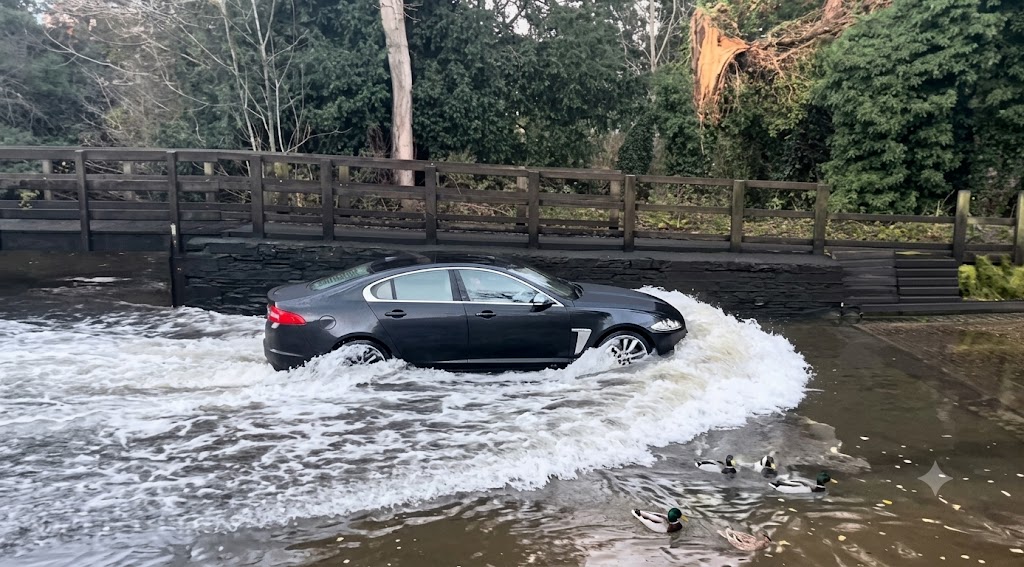
If you spend any time on Instagram, you will have seen them. Reels of drivers attempting flooded fords and river crossings across the UK, usually filmed by someone standing safely on dry land with a phone, usually ending with a car grinding to a halt mid-stream, white smoke pouring from the exhaust and a very sheepish driver contemplating their next phone call. It is compelling viewing. It is also an extremely expensive way to spend a Tuesday afternoon.
The question that always follows is whether insurance will actually pay out when this happens. The honest answer is: it depends, and the details matter more than most people realise.
It Comes Down to What Type of Cover You Have
There are three main types of car insurance in the UK and they treat flood damage very differently.
Comprehensive cover is the only type that typically includes flood damage to your own vehicle. If your car is damaged by water, whether you drove into a flooded road, a ford or found it submerged after overnight flooding, comprehensive cover should pay out subject to your excess and the specific terms of your policy. It is the one to have if you live somewhere that floods regularly or you spend time on rural roads with water crossings.
Third party, fire and theft does not cover damage to your own vehicle in a flood. It protects against damage to other people’s vehicles and property, and covers you for fire and theft, but your own flood damage is not included. If your car ends up written off in a flooded ford, you are paying for a replacement yourself.
Third party only is the most basic cover available and covers nothing relating to your own vehicle at all. Flood damage, collision damage, fire, none of it. If this is what you have and you drive into standing water, the financial consequences are entirely yours.
The Negligence Problem
Here is where it gets complicated even for those with comprehensive cover.
Deliberately driving into a flooded area, particularly one that is clearly signposted as closed or where the depth is visibly dangerous, can be treated as negligent behaviour by your insurer. If they determine that you knowingly drove into a situation that a reasonable driver would have avoided, they may refuse the claim entirely or reduce the payout.
The Instagram ford videos are a perfect illustration of this. If someone records you intentionally driving into a fast-flowing river crossing, shares it publicly, and the car subsequently gets written off, your insurer is not going to be sympathetic. You have documented your own negligence.
This does not mean every flooded road claim gets rejected. A driver who encounters unexpected standing water on a road with no warning signs and sustains engine damage is in a very different position to someone who drove through a closed ford for social media content. The distinction matters and insurers will investigate.
Flood Damage Claims: What to Do
If your car is damaged by flood water, the process is straightforward but needs to happen quickly.
Document everything before anything is moved or dried out. Photographs and video of the water level, the damage and the location. The more evidence you have of the conditions, the stronger your claim.
Contact your insurer as soon as possible. Do not attempt to start the car if it has ingested water. Starting a water-damaged engine is one of the fastest ways to turn a repairable flood claim into a total loss through hydrolocking, where water in the cylinders causes catastrophic internal damage when the engine fires. It is the difference between a repair bill and a write-off, and it happens in seconds.
The insurer will send a claims adjuster to assess the damage. Based on their findings the car will either be approved for repair or written off as a total loss. Water damage can be deceptive. What looks cosmetic on the surface can involve significant damage to electronics, the ECU, wiring looms and mechanical components that only becomes apparent during a full inspection.
The Simple Advice
If the road is flooded, turn around. No journey is worth a written-off car, a refused insurance claim or the genuine safety risk that comes with driving through water of unknown depth and flow speed. Six inches of fast-moving water can knock a person off their feet. Twelve inches can move a car. Two feet can carry most vehicles away entirely.
The Instagram reels are funny until they are not. The driver standing next to a hydrolocked engine in the middle of a flooded ford, waiting for a recovery truck, is having a very different Tuesday to the one they planned.
Understand your policy. Know what you are covered for. And if in doubt, find another route.
Have you ever been caught out by flood water? Let us know in the comments.
Related reading: