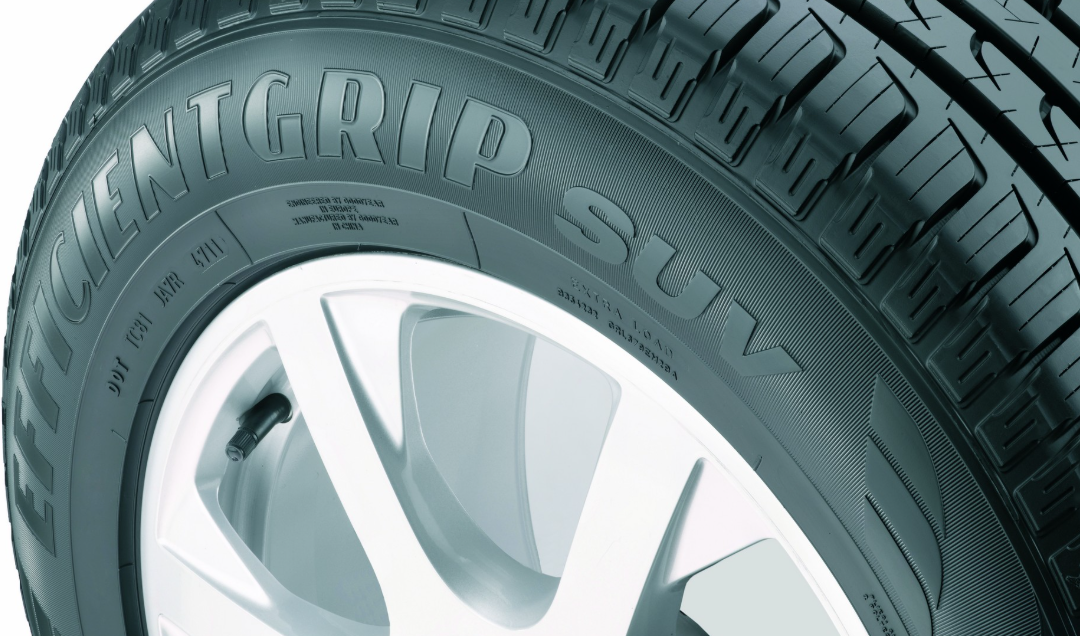
When I got my Volvo EX30, it came fitted with Goodyear EfficientGrip SUV tyres. The BYD Atto 2 I have been testing runs on Hankook iON GT SUVs. Both are specifically engineered for electric vehicles. Tyre choice on an EV is not a detail. It is one of the most significant variables in real-world range, and most buyers give it almost no thought at all.
This guide explains why EV tyres are so important, what makes a good one, what the genuine trade-offs are, how the industry got here, and what the future looks like for rubber designed specifically for electric cars.
Why Tyres Matter More on an EV Than a Petrol Car
On my BMW M140i, I didn’t think about rolling resistance at all. I wanted grip. I needed wet performance. I want confidence, something I found lacking when really pushing on the car. The M140i is a performance car and it gets performance tyres. Fuel economy is not the point, and the tyre choice reflects that.
On a diesel or regular petrol car, the tyre choice makes a difference at the margins. Fuel economy varies a few percent between a good low rolling resistance tyre and a budget option. It matters, but not urgently. The engine burns fuel regardless. A few percent more or less is hard to feel at the pump.
Switching to the EX30 changed my thinking completely. My priorities have shifted. Efficiency is now the primary consideration, and that shift has made me look at tyres in a completely different way.
On an EV, every single source of inefficiency is a larger proportion of the total. Rolling resistance, which in a petrol car is just one of many losses absorbed by a relatively wasteful engine, becomes proportionally much more significant in an EV with a highly efficient drivetrain. Add to that the fact that electric cars are heavy. Battery packs are dense and weighty. The EX30 weighs around 1,800kg. The Atto 2 is similar. That weight amplifies the importance of rolling resistance, because a heavy car pressing down on a tyre that deforms easily loses more energy to heat than a lighter one.
The upshot is simple. Put the wrong tyres on an EV and you will see a noticeable drop in real-world range. Not a small one. Independent tests have shown range reductions of 10 to 20 percent when switching from OEM EV-specific tyres to budget alternatives. That is 20 to 40 miles gone from a typical EV per charge. You would not accept that from a software update. You should not accept it from a tyre.
What Makes a Tyre Suitable for an EV?
There are four key challenges that EV-specific tyres are designed to address.
Rolling resistance. This is the energy lost to friction and heat as the tyre deforms under load. Lower rolling resistance means more of the battery’s energy reaches the road rather than disappearing as heat in the rubber. EV tyres use specific compound formulations and construction techniques to minimise this without sacrificing wet grip. More on that trade-off in a moment.
Weight capacity. Because EVs are substantially heavier than equivalent petrol cars, EV tyres carry higher load ratings than standard fitments of the same size. An EV tyre has to handle the weight of the battery pack as well as everything else, and it has to do so consistently over tens of thousands of miles.
Torque. Electric motors deliver their full torque instantly from standstill. That is wonderful for performance but hard on tyres. Sudden, sharp torque application causes abrasion and wear on a tyre not designed for it. EV-specific compounds are formulated to resist this.
Noise. Without a combustion engine masking road noise, cabin quietness in an EV depends heavily on the tyre. EV tyres often use foam acoustic liners inside the tyre carcass to absorb road noise that would otherwise transmit directly into the cabin. It is one reason why EVs feel so quiet at speed, but only if the right tyres are fitted.
The Goodyear EfficientGrip SUV on the EX30 and the Hankook iON GT SUV on the Atto 2 address all four of these. They are not standard tyres with a different badge. They are purpose-built products designed around the specific demands of heavy, high-torque, battery-powered vehicles.
The Trade-Off: What EV Tyres Give Up
Tyre engineers refer to something called the magic triangle: the three key properties of rolling resistance, wet grip and wear resistance. Improve one and you typically worsen at least one of the others. It is a fundamental limitation of rubber chemistry rather than a failure of engineering.
The most significant trade-off for low rolling resistance tyres is wet braking performance. A harder, stiffer compound that resists deformation and generates less heat also grips less on a wet road surface. This is not a subtle theoretical concern on UK roads. In November on a rainy motorway slip road, it matters.
A 2025 EV tyre test found that the tyre with the lowest rolling resistance and best range result also returned the longest wet braking distances in the group. The Hankook iON evo, which is the brand family fitted to the Atto 2, came out on top overall precisely because it struck a better balance between efficiency and wet safety rather than chasing efficiency alone.
There is also a noise reduction compromise. Reducing road noise is often achieved by reducing the lateral siping in the tread. Less siping blocks noise transmission but also reduces water evacuation from the contact patch, which compounds wet weather concerns.
This is where my thinking has genuinely shifted. On the M140i I chose grip and wet performance without a second thought. On the EX30, I want efficiency, but I am not prepared to compromise safety to get it. The sweet spot is a tyre that scores well across the whole EU label, not just the rolling resistance column. Modern EV-specific compounds from the better manufacturers have largely closed this gap, but it has not disappeared entirely and budget low rolling resistance tyres can still show meaningful wet braking distance penalties.
The practical lesson: always look at the full EU tyre label and check independent test results before buying. A tyre rated A for rolling resistance and C for wet grip is not the right choice for UK roads whatever the range numbers say.
The BMW i3: An Engineering Masterclass in Tyre Thinking
When BMW launched the i3 in 2013, it fitted the car with 155/70R19 Bridgestone Ecopia tyres. The dimensions are extraordinary. At 155mm wide, these are narrower than many bicycle tyres. A typical family car sits on tyres 205 to 225mm wide. The i3’s tyres are motorcycle-thin.
The reasoning was deliberate and radical. BMW and Bridgestone developed what Bridgestone called ologic technology: a tall, narrow tyre that dramatically reduces both aerodynamic drag and rolling resistance while maintaining a sufficient contact patch for grip. The key insight is that contact patch area does not have to be wide to be large. A tall, narrow tyre creates a long, thin contact patch that provides similar grip to a shorter, wider one, but with a fraction of the frontal area pushing through the air.
The aerodynamic benefit is significant. A narrow tyre cuts through air more cleanly than a wide one. At motorway speeds, where aerodynamic drag is the dominant energy loss, this makes a measurable difference to range. The rolling resistance benefit works at all speeds. The narrow compound running at higher pressures deforms less under load and loses less energy to heat. Independent owner testing found that the all-narrow setup produced noticeably faster acceleration than the mixed-width setup, which is a remarkable real-world validation of the theory.
The compromise was handling confidence and choice. The i3 on its narrow tyres does not corner like a sports car. It was not designed to. It was designed to go as far as possible on the smallest battery feasible, and in that mission the tyres were central to the engineering philosophy. The tyres were so specific to the car that BMW commissioned Bridgestone to develop them from scratch. When i3 owners need replacements, the options are limited and often expensive, which is a real-world penalty for the bespoke engineering.
As a proof of concept that tyre design can dramatically affect EV efficiency, the i3 remains the clearest demonstration ever made.
Different Cars, Different Priorities
On the M140i, I put sticky performance rubber on without a second thought. The car produces serious power, goes hard in corners, and the whole point of driving it is the engagement and confidence you get from a tyre that works with the chassis at the limit. Rolling resistance does not enter the conversation. Range is not a factor. Wet grip and lateral grip are everything.
On the EX30, my thinking is almost the reverse. I want the lowest rolling resistance I can get without compromising wet safety. I charge on an Octopus Intelligent tariff at 5.5p per kWh. Every percent of range I lose to the wrong tyre choice is money leaving my pocket every time I charge. The EfficientGrip is there for a reason and I will be sticking with like-for-like when the time comes to replace them.
On the Atto 2, the Hankook iON GT represents exactly the balance I want: an EV-specific tyre that performs well in independent tests across both efficiency and wet braking. It is not the absolute lowest rolling resistance available, but it is the sensible choice for a UK driver who needs to be confident in October rain as well as summer efficiency runs.
Understanding what your car is actually for is the starting point for every tyre decision.
A Brief History of Efficient Tyres
The quest for lower rolling resistance tyres predates EVs by several decades. The first serious push came from the oil crisis of the 1970s, when manufacturers and tyre companies began looking seriously at every source of fuel consumption. Michelin’s radial tyre construction, which had been around since the 1940s but became dominant in the 1970s, delivered a significant rolling resistance reduction over the bias-ply tyres it replaced.
The next significant step came in the late 1980s and early 1990s with the development of silica-based tread compounds. Silica reduces rolling resistance without the wet grip penalty of traditional carbon black compound, which had previously made the rolling resistance and wet grip trade-off seem unavoidable. Silica technology broke that compromise and is now standard across virtually all quality tyres.
By the 2000s, EU tyre labelling regulations required manufacturers to publish rolling resistance ratings, which created commercial pressure to improve them. Green-rated tyres became a marketable product rather than a niche engineering curiosity.
The EV revolution has accelerated everything. Tyre companies now invest heavily in EV-specific research because the stakes are higher and the market is growing. Michelin, Bridgestone, Goodyear, Continental, Pirelli and Hankook all have dedicated EV tyre programmes. The iON branding used by Hankook signals an EV-specific product line. The Goodyear EfficientGrip similarly exists because Goodyear identified the EV market as a distinct technical challenge requiring a distinct solution.
The Future of EV Tyres
Several directions are clear from where the industry currently sits.
Airless tyres. Michelin has been developing its Uptis airless tyre concept for over a decade. An airless tyre cannot puncture, cannot go flat and eliminates the pressure variation that affects rolling resistance. Commercial launch has been repeatedly delayed but is getting closer, and the technology is genuinely interesting for EVs where consistent rolling resistance directly affects range predictability.
Self-sealing tyres. Already in production on some vehicles. A sealant layer inside the tyre automatically seals small punctures. This allows slightly thinner tyre walls, reducing weight, and eliminates the need for a spare wheel or run-flat construction, both of which add weight that costs range.
Integrated sensors. Tyre pressure monitoring already exists but future systems will monitor tread depth, compound temperature, load and rolling resistance in real time, feeding data to the vehicle’s energy management system to adjust driving style suggestions or routing.
Narrower fitments becoming more mainstream. The i3 was ahead of its time. As EV manufacturers become more aggressive about range, the aerodynamic and rolling resistance case for narrower, taller tyres is likely to influence more mainstream designs. The engineering logic is proven. The industry was slow to follow after the i3, but the conversation is happening more seriously now.
What Happens When You Put the Wrong Tyres on an EV
The cheapest available tyre is not a neutral choice. It is an active decision to reduce your car’s range, potentially increase road noise, and risk compromising handling under the specific load and torque conditions of an electric vehicle.
The pressure to go cheap is understandable. EV-specific tyres cost more than budget alternatives. But if your car loses 15 percent of its range from a tyre downgrade, and you charge at home on a smart tariff, you have effectively made your annual charging bill larger by 15 percent for every year those tyres are fitted. Over a typical 30,000-mile tyre lifespan, the maths on the cheap option rarely wins.
When replacing tyres, look for A or B rated tyres on the EU label’s rolling resistance column, but check the wet grip rating equally carefully. Look for brands with dedicated EV tyre lines. Stick to the manufacturer’s specified size and load rating. Check whether your car uses an acoustic foam liner inside the tyre, because not all replacement options include it and the difference in cabin noise without it is very noticeable in an EV.
Tyre Pressure: The Free Efficiency Win
Tyre choice and tyre pressure are related but distinct. Even the best EV-specific tyre fitted at the wrong pressure performs badly. Under-inflation increases rolling resistance, generates more heat and wears the tyre unevenly. On an EV, the effect on range is measurable from day one.
Check pressures monthly and always when the tyres are cold. For most EVs, running at the higher end of the manufacturer’s recommended range gives the best efficiency. The recommended pressure for your specific EV is in the handbook or on the door sill sticker, and it is usually different from the maximum pressure marked on the tyre sidewall.
We cover tyre pressure in detail as part of our EV Hypermiling Techniques guide, including how it fits into the broader approach to maximising real-world range that helped us record 0.91p per mile in the BYD Atto 2.
Get the right tyre
Petrol car drivers can afford to ignore tyres because the consequences of a bad choice are modest and masked by a generally wasteful drivetrain. EV drivers cannot afford the same indifference. The physics of a heavy, efficient drivetrain make tyre choice a genuinely important decision with real, measurable consequences for range, noise, wet safety and running cost.
My priorities have changed as my cars have changed. The M140i got the grippiest rubber I can find. The EX30 gets EfficientGrip. The Atto 2 runs iON GTs. Each car has a job to do and the tyres reflect that.
The Goodyear EfficientGrip on the EX30 and the Hankook iON GT on the Atto 2 are not marketing choices. They are engineering decisions made by manufacturers who understand that a precision drivetrain deserves precision rubber. The BMW i3’s extraordinary narrow tyres were the purest expression of that philosophy.
When your EV tyres wear out, buy the right ones. Check the full EU label. Read the independent tests. And do not let the upfront saving on a budget tyre cost you more in charging bills over the next three years than the premium tyre would have.
Have you noticed a range difference between tyre brands or types on your EV? Let us know in the comments.
Related reading: