
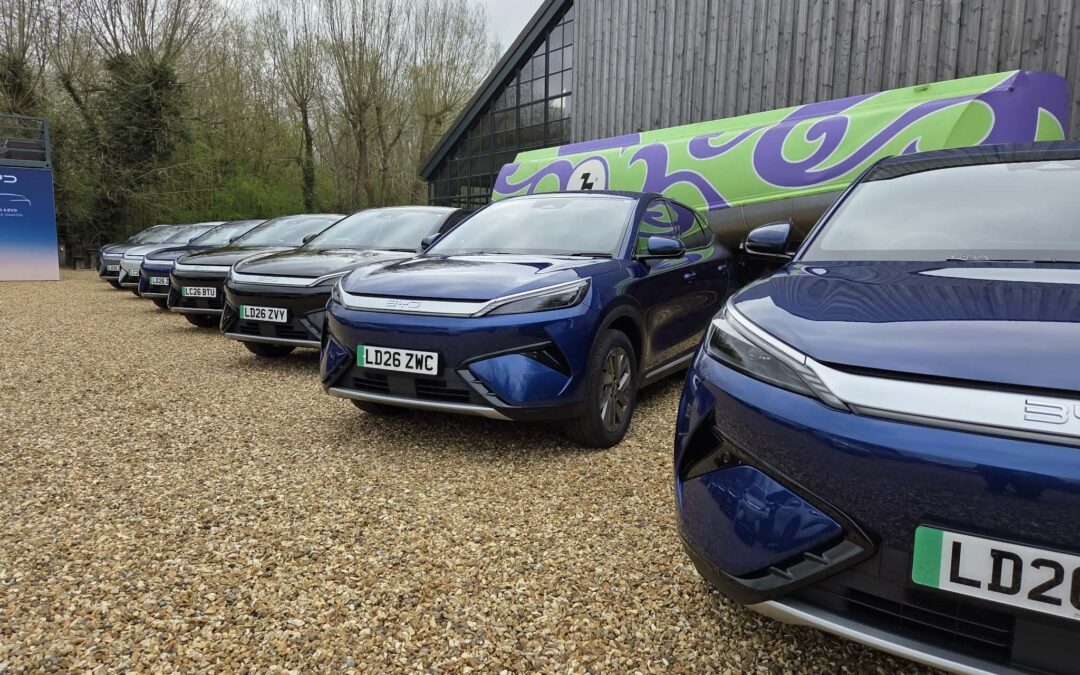
If you’d told me a few years ago that two Chinese manufacturers would be shaping the UK’s budget EV market, I’d have raised an eyebrow. Back then, the idea of a Chinese brand on British driveways still felt like a novelty — something you’d see in a press release, not in your neighbour’s parking space. But the market has moved faster than anyone expected, and now BYD and MG are locked in a quiet but meaningful battle for Britain’s value‑conscious EV buyer.
What’s interesting is how differently the two brands have approached the UK. One has arrived with a clear plan, a mature product line, and a sense of direction. The other seems to be improvising its way through a market that’s becoming less forgiving by the month. And if you’ve spent any time around these cars — or spoken to owners — you’ll know exactly which is which.
BYD: The brand that came prepared
BYD’s arrival in the UK wasn’t loud. It wasn’t flashy. It didn’t rely on nostalgia or badge recognition. Instead, BYD turned up with something far more valuable: competence.
The first time you drive a Dolphin or an Atto 3, you notice the difference immediately. There’s a sense of calm in the way the cars behave — not in a soft, vague way, but in a “this has been tested properly” way. The ride is sorted. The charging curve is predictable. The interior doesn’t rattle like a box of Lego. The software doesn’t feel like it was rushed out the door to meet a quarterly target.
BYD’s cars feel finished.
That’s not a word I use lightly. Plenty of EVs on the UK market feel like they’re still waiting for the update that makes them whole. BYD’s lineup, by contrast, feels like the engineers were allowed to finish their homework before the marketing team started shouting.
And then there’s DM‑i — BYD’s hybrid system that, frankly, makes some established brands look like they’ve been asleep at the wheel. Real‑world efficiency that borders on ridiculous. Refinement that feels a class above the price. A drivetrain that doesn’t hunt, hesitate or complain. It’s the kind of hybrid tech you’d expect from a company that’s been quietly building batteries for half the world.
BYD isn’t trying to be flashy. It’s trying to be good. And in the value EV segment, good wins.
MG: The brand that keeps losing its footing
MG had the head start. The MG4 was the first genuinely affordable EV that didn’t feel like a compliance car. It was the moment MG could have cemented itself as the go‑to brand for budget‑friendly electric motoring in the UK.
But instead of building on that momentum, MG has spent the last two years stumbling.
The pricing changes have been confusing. The spec adjustments have been inconsistent. The dealer experience varies wildly depending on where you live. And the cars themselves — while still decent value — increasingly feel like they’re being held together by enthusiasm rather than engineering direction.
The MG4 is a perfect example. On paper, it’s still one of the best value EVs you can buy. But paper isn’t what people drive. Owners have been reporting the same issues repeatedly: software quirks that appear and disappear like ghosts, build inconsistencies that shouldn’t exist in 2026, and a general sense that MG is reacting to the market rather than leading it.
It’s not that MG is bad. It’s that MG is unsteady. And unsteady is a dangerous place to be when buyers are becoming more cautious, more informed, and more sceptical of “it’ll be fixed in an update.”
The UK buyer has changed — MG hasn’t
The UK EV market in 2026 is not the same market MG entered in 2022. Back then, early adopters were willing to overlook quirks, software bugs, and rough edges. They were excited. They wanted to be part of the EV shift. They were willing to tolerate imperfections.
That era is over.
Today’s buyer is more pragmatic. They want reliability. Predictability. A car that doesn’t require them to become a part‑time software tester. They want something that works on day one and keeps working without drama.
BYD understands this. MG still seems to be operating in the old world.
MG sells on headline price.
BYD sells on execution.
And that’s why BYD is quietly pulling ahead.
Real‑world impressions matter more than brochures
Spend time with owners and you’ll hear the same pattern. BYD owners talk about how surprisingly refined their cars are. How little goes wrong. How the cars feel more expensive than they are. How the charging experience is predictable. How the software doesn’t randomly reinvent itself.
MG owners, on the other hand, often talk about the value — and then immediately follow it with a caveat. “It’s great for the money, but…” is a phrase I’ve heard more times than I can count. And those caveats add up. They shape perception. They influence recommendations. They affect resale.
In a tightening market, perception is everything.
The future: BYD rising, MG drifting
If MG doesn’t stabilise its lineup, refine its software strategy, and stop changing specs like it’s rearranging furniture, it risks becoming the brand people buy only when the monthly payment is the lowest. That’s not a sustainable position in a market where buyers are becoming more demanding and less forgiving.
BYD, meanwhile, is building trust — slowly, steadily, and with cars that feel mature, deliberate, and well‑engineered. It’s not trying to win the market with gimmicks. It’s trying to win it with competence.
And competence is exactly what the UK buyer wants right now.
The verdict
The battle for Britain’s budget EV crown isn’t over. But the direction of travel is clear. BYD is rising because it came prepared. MG is slipping because it didn’t adapt.
One brand is building momentum.
The other is burning through goodwill.
And unless MG changes course soon, BYD won’t just win this battle — it’ll win the entire segment.