The Nissan Juke has been dividing opinion since the moment it appeared at the Geneva Motor Show in March 2010. Weird headlights. Bug-eye styling. A shape that looked like it had been designed by someone who had never seen a car before. Somehow it worked. It has been one of the best-selling cars in the UK for the best part of fifteen years.
But popularity and reliability are not the same thing. The Juke has a complicated history on the reliability front, and the version you buy matters enormously. This guide covers everything you need to know the generations, the engines to choose, the ones to avoid, the common faults, what to check before you hand over your money, and what we would pick if it were our cash.
A Brief History of the Nissan Juke
Mk1 (2010 to 2014): The Original Marmite Machine
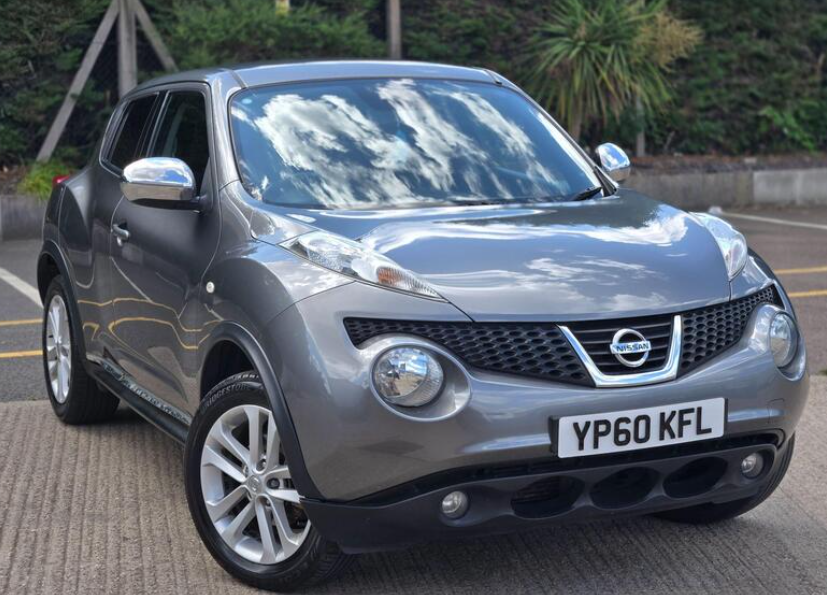
The original Juke launched in 2010 and immediately became a talking point. The round headlights were actually the fog and position lights — the real headlights were the larger units lower down in the bumper. It was built at Nissan’s Sunderland plant, which remains a significant UK manufacturing presence.
The early Mk1 was available with a 1.6-litre naturally aspirated petrol producing 115 horsepower, a 1.6-litre turbocharged DIG-T producing 190 horsepower, and a 1.5-litre dCi diesel. The naturally aspirated 1.6 came with the option of a CVT automatic gearbox, and that combination is the one you want to avoid. More on that shortly.
Trim levels ran from Visia at the base through Acenta and up to Tekna. The interior was a mixed bag — motorcycle-inspired dials, a novel central console, but cabin space that was genuinely tight and boot space that fell short of rivals. The ride quality on early cars was unsettled and the interior materials felt a grade below what the price suggested.
Mk1 Facelift (2014 to 2019): Better in Almost Every Way
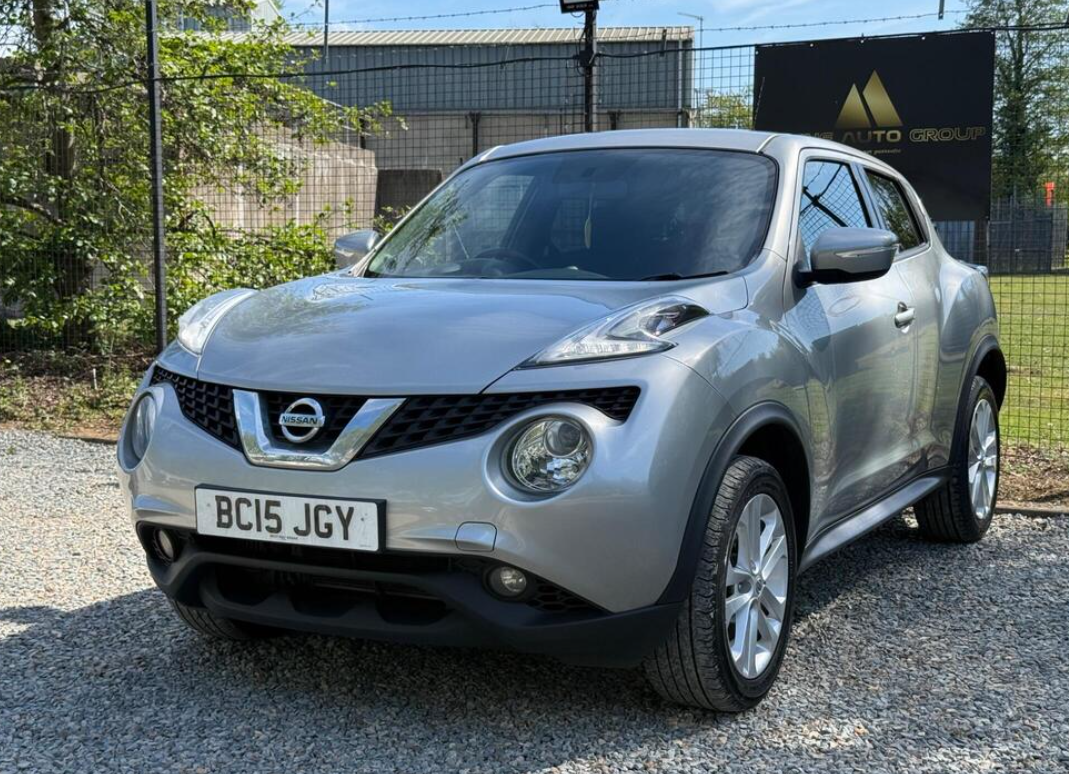
The 2014 facelift addressed most of the Mk1’s shortcomings. The interior was upgraded with improved materials and a larger boot. More importantly, the old 1.6 naturally aspirated petrol was largely replaced by the 1.2-litre DIG-T turbocharged engine producing 115 horsepower, which was more refined and more economical. N-Connecta and Tekna trim levels became the most popular choices.
The 1.5 dCi diesel was carried over and remains the best fuel economy option in the Mk1 lineup. The 4WD system available on some variants used a torque vectoring all-wheel drive arrangement that was genuinely useful in poor conditions.
If you are buying a Mk1 Juke, the post-2014 facelift cars are significantly more sorted than the pre-facelift versions and are available at very affordable prices on the used market.
Mk2 (2019 to Present): A Proper Car at Last
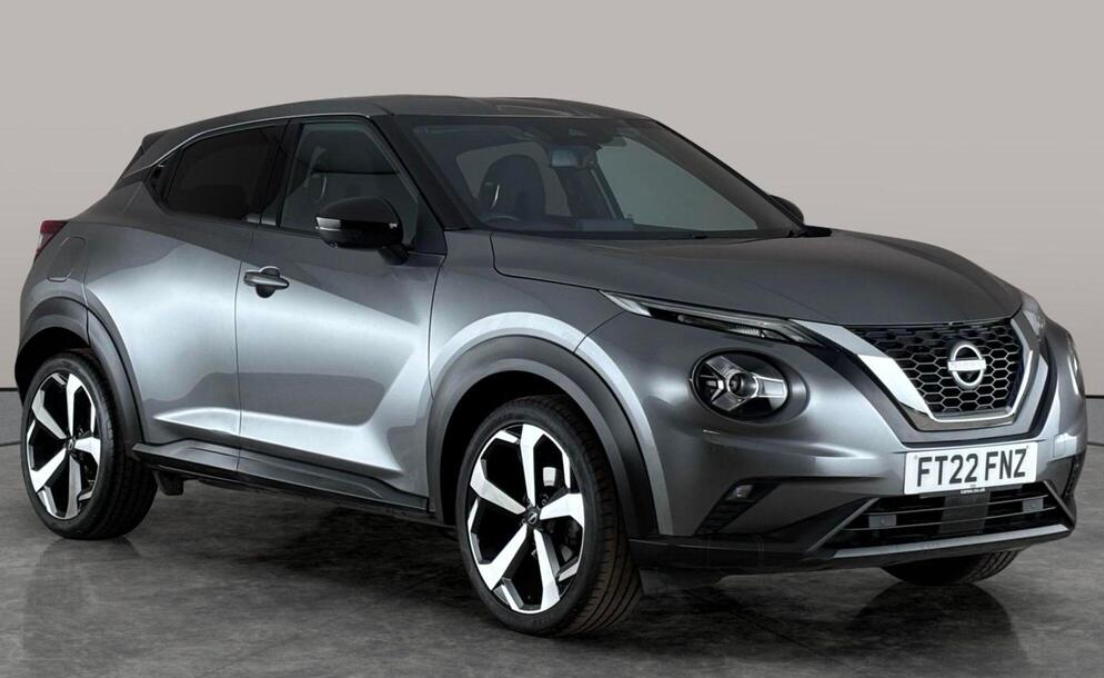
The second-generation Juke arrived in late 2019 and was a genuine step change in almost every area. Longer, wider and taller than its predecessor, it finally offered adequate rear passenger space and a boot that could accommodate a reasonable weekly shop. The interior quality took a significant leap forward and the ride quality, previously one of the biggest criticisms, was transformed.
The Mk2 is built on the CMF-B platform shared with the Renault Clio, which explains both the improved refinement and the absence of all-wheel drive. All Mk2 Jukes are front-wheel drive. The engine range is simpler: a 1.0-litre three-cylinder DIG-T turbocharged petrol producing 114 horsepower available with a six-speed manual or seven-speed dual-clutch automatic, and from 2020 a self-charging hybrid combining a 1.6-litre petrol engine with electric assist.
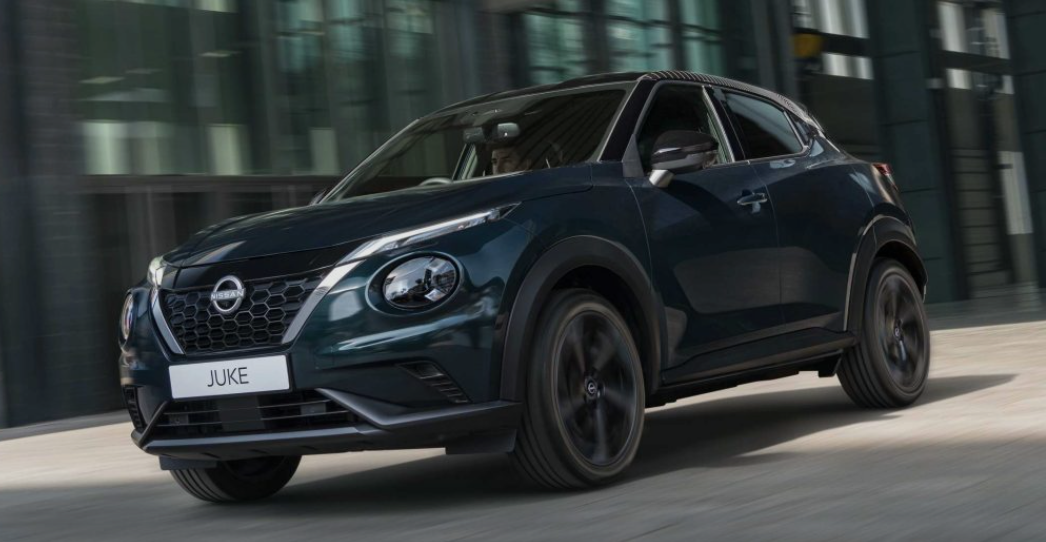
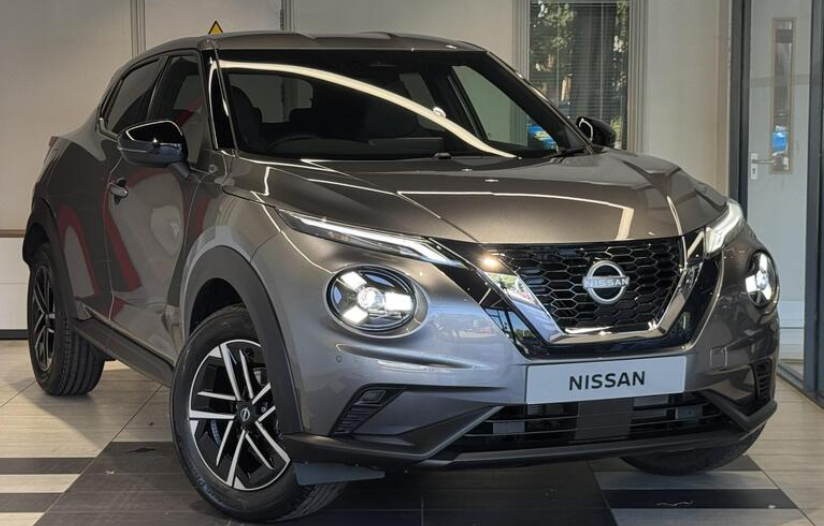
A 2024 facelift updated the exterior styling, added a larger infotainment screen and refined the hybrid system. This is the current version on sale today (below)
The Most Economical Nissan Juke
If economy is a priority the Mk2 hybrid is the clear answer. Official figures of up to 49.5mpg and real-world economy typically in the 42 to 47mpg range make it the most frugal Juke ever built. It does not plug in, so there is no additional charging cost or infrastructure requirement, and the petrol engine charges the battery automatically as you drive.
Among non-hybrid versions, the 1.5 dCi diesel manual from the Mk1 range returns official figures of around 57mpg. Real-world economy of 45 to 52mpg is achievable with a careful right foot, making it a strong choice for high-mileage drivers who cover predominantly motorway miles. Avoid the diesel if you are mostly doing short urban journeys. The DPF will block. We will come back to that.
In the Mk2 range, the 1.0 DIG-T manual returns around 44 to 48mpg in real-world use and is a much more refined experience than the older 1.2 DIG-T it replaced. For most buyers the 1.0 DIG-T is the sensible choice: adequate performance, decent economy and none of the reliability concerns that dogged the earlier petrol engines.
ULEZ Compliance: What You Need to Know
If you are buying a used Juke and live in or near London or one of the other UK clean air zones, ULEZ compliance is worth checking carefully before you buy.
The rules break down as follows:
Petrol Juke models: All petrol Jukes registered from 2006 onwards meet Euro 4 emissions standards and are ULEZ compliant. In practice, all UK-market Mk1 Jukes from launch qualify. You are safe with any petrol Juke.
Diesel Juke models: Diesel vehicles need to meet Euro 6 standards to be ULEZ compliant. For the Nissan Juke 1.5 dCi, this means models registered from approximately September 2015 onwards. Earlier diesel Jukes, including the majority of pre-facelift Mk1 diesel models, do not meet Euro 6 and will incur the £12.50 per day charge in the ULEZ zone.
Mk2 Juke (2019 onwards): All variants including petrol and hybrid are ULEZ compliant.
Always verify compliance using the official TfL checker at tfl.gov.uk before purchasing a diesel Juke, particularly if it was registered before 2016. Do not rely on the year of manufacture alone — check the specific registration.
Top 5 Common Nissan Juke Problems
1. CVT Gearbox Failure (Mk1 1.6 Automatic, 2010-2014)
This is the big one and the reason early automatic Mk1 Jukes should be approached with extreme caution. The continuously variable transmission fitted to the 1.6 naturally aspirated petrol Mk1 Juke has one of the worst reliability records of any gearbox fitted to a popular UK car. Symptoms include shuddering and jerking under acceleration, whining noises, hesitation and in the worst cases complete transmission failure requiring a full replacement. Costs run to several thousand pounds.
What Car’s 2025 Reliability Survey named the petrol Juke Britain’s least reliable new car, with 24% of owners reporting a fault and 64% of those waiting more than a week for a repair. The CVT is the primary culprit. If the car you are looking at has the 1.6 automatic, walk away unless the gearbox has been recently replaced with a full paper trail.
2. DPF Blockage (1.5 dCi Diesel)
This one is personal for me. My Nissan Qashqai — which shared the same 1.5 dCi engine and DPF setup as the diesel Juke — was a comfortable and reasonably economical car that was plagued by DPF issues from early in its life. Short journeys, insufficient regeneration cycles and a filter that blocked with frustrating regularity. The diesel Juke suffers from exactly the same problem.
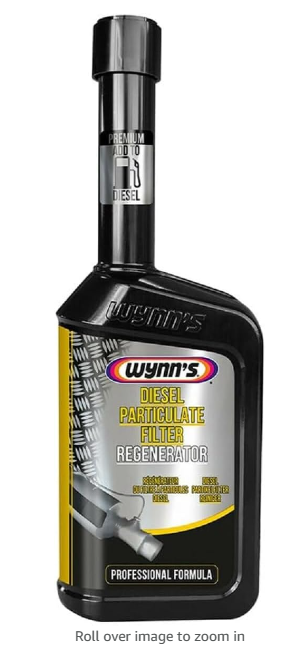
If you cover predominantly short urban journeys and are considering the diesel Juke, do not. The DPF will not have sufficient time or conditions to complete a passive regeneration cycle and will block. A forced regeneration at a dealer costs around £280 including oil and filter change. If that does not work, you are looking at DPF replacement costs of £500 to £2,000 depending on whether a cleaning or replacement is needed. I have covered the DPF issue in detail in our Nissan Qashqai DPF guide — the same principles apply to the Juke diesel.
The diesel is genuinely good on regular motorway runs. Just be honest with yourself about how you actually drive before you buy one.
3. Turbocharger Problems (1.2 DIG-T Petrol)
The 1.2 DIG-T turbo petrol introduced in the 2014 facelift was a significant improvement over the naturally aspirated 1.6, but it brought its own reliability concerns. Turbocharger failure is the most reported issue, typically manifesting as loss of power, strange noises from the engine bay and excessive smoke from the exhaust. The cause is often blocked oil feed pipes starving the turbocharger of lubrication. Regular oil changes with the correct specification oil are essential on this engine. The Mk2 1.0 DIG-T is significantly more reliable.
4. Electrical Faults and Battery Drain
Electrical gremlins are a recurring theme across multiple Juke generations. Battery drain even on relatively new cars has been widely reported, often traced to parasitic drain from infotainment or comfort systems that do not switch off properly. Power window, door lock and air conditioning faults also appear regularly in owner surveys. On Mk2 models, warning lights illuminating without apparent cause and infotainment screen freezing are among the most common owner complaints. Most are software-related and can be resolved with dealer software updates.
5. Clutch Wear on Manual Gearbox Models
Premature clutch wear has been reported across both Mk1 and Mk2 manual variants. The clutch pedal not returning fully after a gear change is the most common symptom, often caused by a leak in the clutch master cylinder. Clutch replacement costs vary but typically run to £400 to £700 at an independent. If the clutch feels spongy, bites unusually high or low, or there is any difficulty selecting gears, budget for a replacement.
What to Look For When Buying
Check the gearbox thoroughly. On any automatic Mk1 Juke, particularly the 1.6 CVT, spend at least 20 minutes in varied driving conditions. Town, dual carriageway, a few hard accelerations from junctions. Any shuddering, jerking, hesitation or whining is a serious warning sign. Do not buy without a full gearbox inspection if there is any doubt.
On diesel Jukes, ask about DPF history. Has it ever been forced regenerated? Has the DPF been cleaned or replaced? What are the owner’s typical journey lengths? A diesel Juke with a history of short journey use and a DPF that has been regenerated multiple times should be approached with caution or priced accordingly.
Check the service history for oil change frequency on the 1.2 DIG-T. This engine is sensitive to oil quality and neglected oil changes accelerate turbocharger wear. Look for annual or 10,000-mile oil changes as a minimum.
Test the electrics systematically. Windows up and down. Air conditioning. Heated seats if fitted. The infotainment. Reversing camera if fitted. All warning lights should extinguish after startup. Any that stay on need investigating.
The bonnet: do not panic. I test drove a Juke and had to pull over because I was convinced the bonnet was not properly latched. It looked raised and I could have sworn it was about to fly up at speed. Turns out this is a well-known characteristic of the Juke’s clamshell bonnet design. At speed, aerodynamic pressure causes the bonnet to lift very slightly at the leading edge, giving the impression it is unlatched. As long as the bonnet warning light on the dashboard is not illuminated, the bonnet is correctly closed. I felt slightly embarrassed at pulling over to check but I genuinely could not be sure. You have been warned.
On Mk2 cars, check the dual-clutch automatic gearbox carefully. The seven-speed DCT is generally more reliable than the old CVT but low-speed crawling, reversing and car park manoeuvring can feel notchy and hesitant, particularly when cold. This is partly inherent to the DCT design but if it feels particularly rough, have it checked.
Check the tyres. The Juke is a relatively heavy small car for its class and tyre wear can be above average. All four should have even tread depth. Uneven wear on the front tyres particularly suggests alignment issues or suspension wear that needs attention.
Our Top Pick
If we were spending our own money on a used Juke today, it would be a 2020 to 2023 Mk2 Juke N-Connecta or Tekna with the 1.0 DIG-T manual or hybrid.
The Mk2 fixed almost everything that was wrong with the Mk1. More space, better quality, a properly resolved ride and genuinely reliable powertrain options. The 1.0 DIG-T manual is the value choice with good fuel economy and none of the CVT drama. The hybrid is the economy choice with the best real-world mpg figures in the range.
The N-Connecta trim hits the sweet spot on equipment — you get the infotainment, the safety systems and the quality feel without paying Tekna premium prices for features you may not need.
Budget around £14,000 to £18,000 for a good Mk2 with sensible mileage. Look for full service history, check the infotainment software is up to date, and do the test drive we described above.
Avoid anything with the 1.6 CVT automatic. Avoid diesel if you do not cover regular motorway miles. And if the bonnet looks slightly open, it probably is not.
Alternatives to the Nissan Juke
If the Juke does not quite tick all the boxes, these are worth a look in the same segment:
Ford Puma — the UK’s best-selling car for three consecutive years. More enjoyable to drive than the Juke, better quality interior, stronger residuals. The mild hybrid system is genuinely effective in urban driving. If you can stretch the budget slightly this is probably the better all-round car.
Renault Captur — more practical than the Juke with a longer wheelbase and a genuinely spacious rear seat. The plug-in hybrid E-Tech version is the most efficient small SUV on the market if you can charge at home. Better reliability record than the Mk1 Juke.
SEAT Arona — built on the VW Group MQB-A0 platform which means the quality is there. More conventional styling if the Juke’s looks are too much, and a more polished driving experience. VW Group engines and reliability.
Hyundai Kona — five-year warranty as standard, strong reliability record and a wide range of engines including fully electric. Lacks the Juke’s character but makes up for it with better long-term peace of mind.
Vauxhall Mokka — sharp styling, competitive pricing and improving quality since the French ownership under Stellantis. The electric Mokka-e is worth a look if budget allows.
Useful Resources for Nissan Juke Owners
If you own a Juke or are buying one, these communities are worth knowing about:
Juke Owners Club (jukeownersclub.co.uk) — the dedicated UK owners club with active forums covering everything from known faults and fixes to modifications, buying advice and technical help. Particularly useful is the diesel issues subforum which documents DPF problems in detail.
Juke Forums (jukeforums.co.uk) — another active community with technical troubleshooting and owner discussion.
Nissan Owners Club (nissanownersclub.com) — covers all Nissan models including a dedicated Juke subforum. Useful if you want broader Nissan brand expertise alongside Juke-specific advice.
Nissan Juke Owners UK (Facebook Group) — a large and active Facebook group where owners share problems, fixes and buying advice.
Nissan Juke Owner’s Group (Facebook Group) — another active Facebook community with thousands of UK members and regular technical discussion.
Final Thoughts
The Nissan Juke is a genuinely likeable car in the right specification. The Mk2 in particular has addressed most of the criticisms that made the Mk1 such a frustrating ownership experience for some buyers. The styling still divides opinion but the substance has caught up.
The key is knowing which version to buy. Avoid the early 1.6 CVT automatic. Be honest about whether diesel suits your driving patterns. Check the service history carefully on the 1.2 DIG-T. And do not pull over because the bonnet looks slightly raised at speed.
Have you owned a Juke? Are there faults or experiences you think we should cover that we have missed? Let us know in the comments. We are always interested in real owner experience and we read everything.
Related reading: