
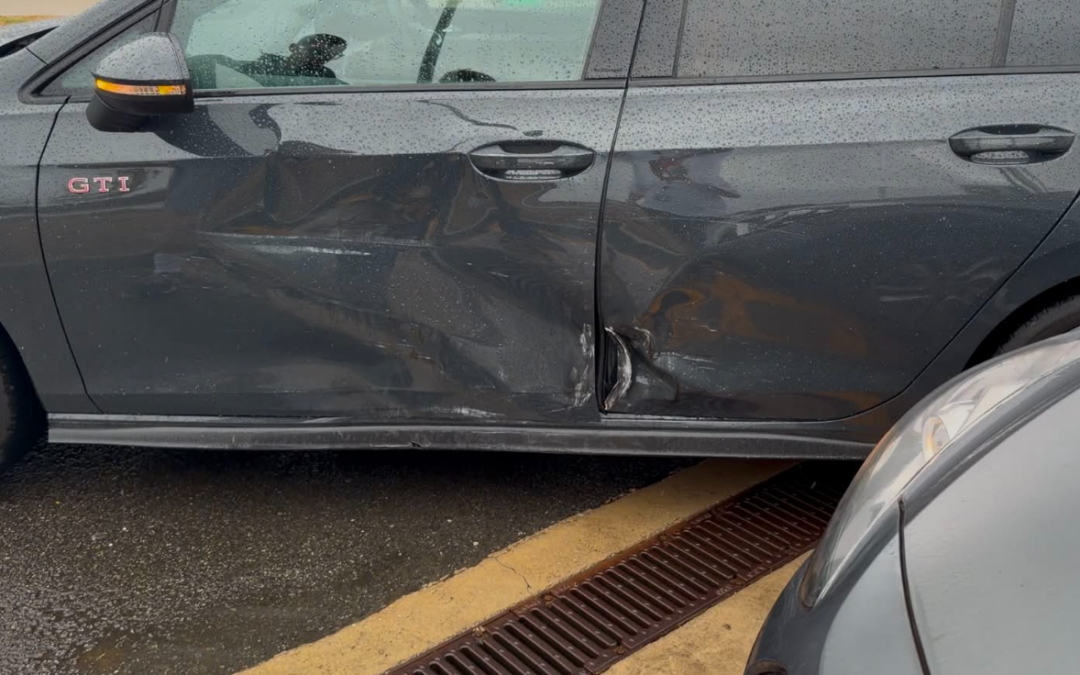
I am writing this as a dad, not as Karl, not as Hypermiler.
My son was involved in a car accident today. He was not at fault. The other driver admitted liability at the scene. And now, because that same driver has apparently decided to change their story, my son is facing the very real prospect of a disputed claim that could follow him around for years, increase his insurance premiums dramatically, and potentially cost him the ability to keep the car he has worked hard for and is financially committed to.
That car is a Golf GTI. His dream car. He bought it on a lease he signed up for in good faith. A commitment he cannot simply walk away from if the insurance premium rises to a point where he can no longer afford to run it.
I am angry about this. Properly angry, in fact. F**king raging. And because this is what I do, I am going to write about it.
The He-Said She-Said Problem
When two drivers disagree about what happened at the scene of an accident, the insurance industry calls it a disputed liability claim. What it means in practice is that two companies — your insurer and the other driver’s insurer — go head to head to establish who was at fault, and the outcome depends on what evidence exists rather than what actually happened.
This is where the system fails young drivers spectacularly.
The other driver admitted liability at the scene. I was a witness to this. In an ideal world, that admission would settle the matter. In reality, verbal admissions at the scene carry almost no formal legal weight in an insurance dispute. There is no obligation on the other driver to repeat that admission to their insurer. They can simply call their insurance company, say the other driver was at fault, and the claim becomes disputed. The burden of proof then falls on both parties to establish the truth through evidence.
If the evidence is thin, or if it is genuinely ambiguous, the insurers may agree a split liability outcome. Fifty-fifty. Both drivers equally at fault. And a fifty-fifty outcome goes on your record as a fault claim, even if you did absolutely nothing wrong.
For an experienced driver in their forties with twenty years of no-claims behind them, a split liability claim is an inconvenience. The premium rises, the no-claims discount takes a hit, and life goes on. For a young driver who is already paying three times what their parents pay for insurance, a recorded claim – fault or split – can be genuinely life-changing in its financial consequences.
What This Does to Young Driver Premiums
Young drivers already pay more for car insurance than any other age group in the UK. A 17 to 25 year old in a modest first car can easily pay £2,000 to £4,000 per year in premiums. The justification is statistical: young drivers are involved in more accidents per mile than any other age group. The data supports the differential, even if it feels profoundly unfair to the individual young driver who is a careful, conscientious road user.
Now add a disputed or fault claim to that picture. A single recorded fault claim can increase a young driver’s annual premium by 30 to 60% for up to five years — the standard period that a claim stays on a driving record and must be declared to insurers. On a £3,000 annual premium, that is an additional £900 to £1,800 per year. Over five years, we are talking about over £7,000 in additional cost that lands on a young driver because another driver decided to change their account of events after the fact.
And that is before we consider the specifics of my son’s situation. He is leased into a car. He has a financial commitment that runs for the term of that lease. If his insurance premium rises to a point where he can no longer afford to run the car, he cannot simply hand back the keys without penalty. The lease does not care about the accident. The monthly payment does not change because another driver decided to tell a different story to their insurer. He is trapped by a financial commitment that is suddenly at risk because of someone else’s decision.
Age Does Not Equal Experience
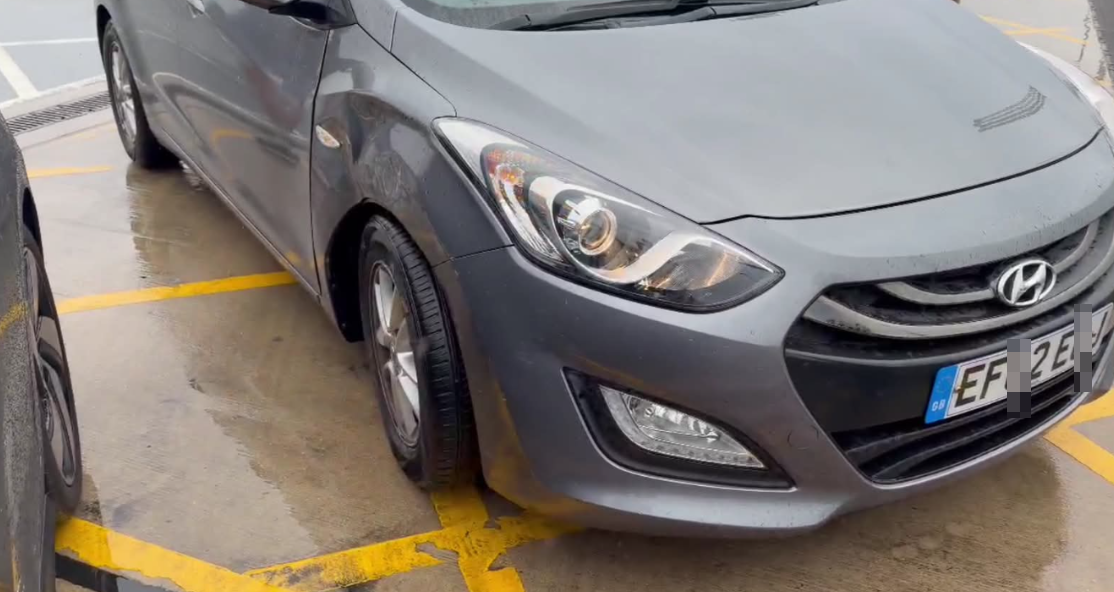
We talk about young drivers as if inexperience is the only factor worth considering when it comes to road safety. It is not.
Older drivers bring their own set of risk factors that the insurance industry and wider road safety conversation consistently underplays. Reaction times slow with age. Vision deteriorates. The ability to process multiple pieces of information simultaneously — the car pulling out, the cyclist in the mirror, the speed of the junction — is not immune to the effects of ageing. Complacency, developed over decades of largely incident-free driving, can be as dangerous as inexperience.
The driver who hit my son had many years of experience behind the wheel. That experience did not prevent the accident. And when the moment came to take responsibility for what had happened — something they apparently had no difficulty doing at the scene — the experience and maturity those decades of driving are supposed to confer did not prevent them from changing their account when they got on the phone to their insurer.
In the UK, drivers aged 70 and over must renew their licence every three years, but this is a self-declaration process. You fill in a form. You confirm that your health has not changed in a way that affects your driving. There is no test. There is no independent assessment of whether your reaction times, vision or decision-making are still appropriate for the roads you are driving on. The DVLA can request a medical review if a GP raises concerns, but there is no mandatory on-road assessment regardless of age.
I think that is wrong. And I think most people, if they were honest about it, would agree.
Several road safety organisations and medical bodies have called for voluntary or mandatory retesting from retirement age. The argument is straightforward: we test young drivers on the basis that they need to demonstrate competence before they are trusted with a vehicle. Why does that principle stop applying at retirement? The age-related changes in cognitive function, reaction time and vision that accumulate over decades are not adequately captured by a self-declaration form completed every three years.
I am not suggesting that all older drivers are dangerous. The vast majority are not. But some are. And the current system has no meaningful mechanism for identifying which ones, short of waiting for an accident to happen.
A young driver who passed their test last year has been assessed on the road in the past twelve months. An older driver with decades on the roads has not been formally assessed since they passed their test, potentially fifty years ago. That asymmetry in how we treat road competence is worth examining seriously.
The Golf GTI: A Dream Built on Hard Work, not on lies.
My son’s Golf GTI was not a vanity purchase. It is the car he worked towards, saved for and committed to and thanks to a great deal from Carwow (not sponsored). A Golf GTI is the kind of car that means something to a young person who loves driving. It is not an old banger chosen because it was cheap to insure. It is a deliberate choice made by someone who cares about cars and has put in the effort to have one.
The prospect of losing the ability to run that car, not because of anything he did, but because another driver decided the version of events they told their insurer bore no resemblance to what they said at the scene, is genuinely unjust. And the insurance system, as currently structured, has very limited mechanisms to protect him from that injustice if the evidence is thin.
I want him to keep his car. I want him to continue to build the driving record he has been building since he passed his test. And I want the system that is supposed to protect drivers in exactly this situation to work properly.
Let’s Hear Your Story
If you are a young driver who has been on the wrong end of a disputed claim, or a parent who has watched this happen to their child, I want to hear from you. Leave a comment below or get in touch directly.
This is not a unique situation. It happens to young drivers across the UK every day. The system that is supposed to protect them is weighted against them in ways that most people do not fully understand until they are sitting in the middle of it.
I am pro young driver. Not because young drivers are always right – they are not. But because when they are right, the system should work for them. And right now, in too many cases, it does not.
Related reading: