
It is a question I get asked a lot, and it is one I have lived through personally. For years I ran a BMW M140i, spending around £70 a week on fuel and carrying a £200 a month bank loan on top of it. Expensive servicing. No warranty. Permanently waiting for something expensive to go wrong. Then I switched to my Volvo EX30 and the difference was startling. Around £5 a week to charge on my Octopus Intelligent Go tariff, a full manufacturer warranty, no more fuel station anxiety. The M140i was admittedly a particularly fun yet thirsty car, but the principle holds for almost any switch from a petrol car to an EV, and the numbers are more compelling than most people realise.
How Much Does the Average UK Driver Spend on Petrol?
According to the Department for Transport’s 2024 National Travel Survey, the average UK car covers 7,100 miles per year, a figure that has dropped significantly over the past two decades as remote working and changing habits have reduced daily commutes.
Let’s use that figure and assume a fairly typical petrol car returning 35mpg in real-world mixed driving. At current UK petrol prices of around 153p per litre as of June 2026, the maths looks like this:
7,100 miles at 35mpg requires around 203 gallons of fuel. That is roughly 923 litres. At 153p per litre, that is approximately £1,412 per year in fuel costs alone. Around £118 per month, or £27 a week.
Now factor in everything else. A petrol car out of its three-year manufacturer warranty means you are effectively self-insuring against mechanical failure. Servicing on a modern petrol car typically runs to £200 to £400 a year. MOTs from year three onwards. Tyres. Consumables. My M140i cost far more than that in fuel alone, never mind everything else. Always something waiting to go wrong.
Don’t get me wrong, the M140i was an animal of a car, but had I still had it during the recent fuel cost spike, that £70 a week might have been nearer £100!
Check out more info here – http://gov.uk/government/statistical-data-sets/nts09-vehicle-mileage-and-occupancy
What Does a New EV Actually Cost?
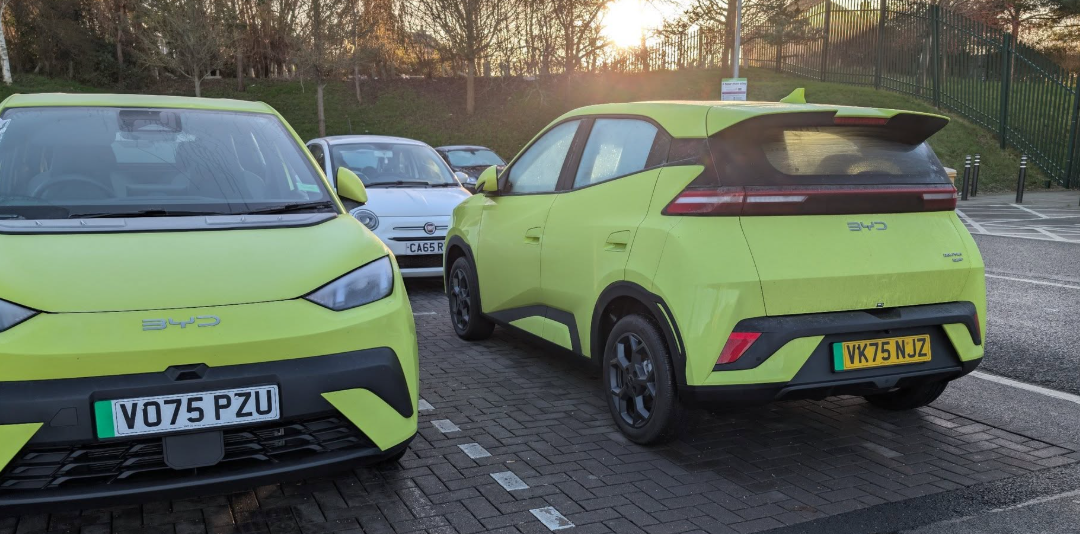
The BYD Dolphin Surf is currently one of the most affordable electric cars you can buy new in the UK. The Dolphin Surf Boost is available from £199 a month on PCP with a £199 deposit and 0% APR representative over 49 months. That is a brand new car, with a full manufacturer warranty, for less than most people spend on a gym membership and a streaming subscription combined.
The Dolphin Surf Boost carries a 43.2kWh battery, uses 13.4kWh per 100 miles according to WLTP testing, and claims 200 miles of range. It also uses BYD’s Blade Battery, which uses lithium iron phosphate chemistry, a technology we have seen for ourselves performing impressively in real-world testing. Our own extended test of the BYD Atto 2 produced 0.91p per mile, which gives you a sense of just how efficient BYD’s electric drivetrains can be in the right hands and some EV hypermiling.
What Does It Cost to Charge?
This is where it gets interesting. If you charge at home on a smart overnight tariff like Octopus Intelligent, you are paying somewhere between 7 and 9 pence per kWh. Let’s use 8p as a working middle figure.
At 7,100 miles per year, the Dolphin Surf Boost uses approximately 951kWh. At 8p per kWh that is £76 per year to cover the average UK mileage. Under £7 a month. Under £1.50 a week.
Compare that to the £1,412 per year in petrol costs calculated above. The annual saving on fuel alone is roughly £1,336. That is over £111 a month back in your pocket just from ditching the pump.
The honest comparison: the PCP is £199 a month. You save roughly £111 a month on fuel. The net additional cost of driving a brand new EV versus running a petrol car, when you offset the fuel saving, is around £88 a month. For that £88 you get a new car under full manufacturer warranty, one service every two years, no MOT for the first three years, and dramatically lower running costs across the board.
Only One Service in Four Years
Here is something worth sitting with for a moment. The Dolphin Surf requires servicing every two years or 20,000 miles. Over a 49-month PCP agreement, that means you might only need a single service for the entire time you own the car. One service in four years.
Compare that to a petrol car requiring an annual service, often more frequently if you cover higher mileage, and the difference in both cost and hassle is significant. Factor in that EVs have no cambelt, no exhaust system, no clutch, no spark plugs and far fewer moving parts than a petrol engine, and the servicing picture becomes even clearer. There is simply less to go wrong, and less frequently.
The Dolphin Surf also carries a six-year manufacturer warranty and an eight-year, 155,000-mile battery warranty. That battery cover means the most expensive component in the car is protected for longer than most people keep their cars at all.
Peace of Mind: The Cost You Cannot Put a Number On
There is something the spreadsheet comparison does not fully capture, and it is the stress of owning an older car out of warranty. Every rattle, every warning light, every slightly unusual noise becomes a mental calculation about whether this is the expensive one. I lived that with the M140i, just waiting for the inevitable. You develop a kind of low-level automotive anxiety where you are permanently braced for the next bill, and the M140i threw up some pretty nice ones, especially on tyres with all that power and fun to be had.
Switching to a new EV with a six-year manufacturer warranty and an eight-year battery warranty removes that entirely. Not partially. Entirely. Nothing major is going to surprise you financially for the best part of a decade. The peace of mind that comes with that is real and it has a value that does not appear in any fuel cost comparison. I cannot put a figure on it, but I know exactly what it felt like to lose it and gain it back when I moved to the EX30.
Higher Mileage Drivers: The Savings Stack Up Fast
The 7,100 miles per year average is a useful baseline but plenty of UK drivers cover considerably more. If you commute 25 miles each way five days a week, that is 13,000 miles in commuting alone before a single leisure journey.
At 35mpg and 153p per litre, 13,000 miles costs around £2,583 in fuel per year. At the Dolphin Surf’s efficiency and 8p per kWh, 13,000 miles costs around £139 in electricity. The annual fuel saving at this mileage is over £2,400. That is more than £200 a month saved on fuel, compared to a £199 monthly PCP payment.
At 13,000 miles a year, the fuel saving more than covers the cost of the car. You are effectively driving a brand new warranted EV for free in fuel cost terms, and pocketing the difference. The higher your mileage, the more compelling the numbers become, and the faster the case for switching moves from interesting to obvious.
My Personal Experience
The switch from the M140i to the EX30 changed my financial relationship with my car completely. The M140i was a wonderful (yet unpredictable) machine, genuinely great to drive, but expensive to run in every possible way. Fuel at £70 a week. A bank loan on top. Servicing that was never cheap and my insurance, even for a 45-year-old like me, was crazy. Always something.
The EX30 costs me about £5 a week to charge on my Octopus Intelligent tariff. New car warranty. No unexpected bills. The financial stress that came with running a thirsty performance car on finance and fuel simply disappeared. The M140i was a special case given how much it drank, but the principle applies much more broadly.
Other EVs Worth Knowing About
The Dolphin Surf is not the only option. The Renault 5 E-Tech starts from just over £20,000 and is widely considered one of the best small EVs on the market, with a more premium feel and excellent real-world range. If the Dolphin Surf is at the limit of your budget, the Renault 5 is the natural next step up.
We are also genuinely excited about the upcoming Vauxhall Corsa GSE, which we will be getting behind the wheel of soon. A compelling EV version of my childhood hot hatch hero car, the Nova GSI. Watch this space.
What About Solar Panels?
If you have solar panels at home, this conversation stops being a comparison and becomes a no-brainer.
Charging an EV with surplus solar generation effectively brings your cost per mile down towards zero on sunny days. Over a full year in the UK, a typical home solar setup can realistically cover a significant proportion of average annual charging needs, particularly if you can charge during the day or use a battery storage system to capture daytime generation for overnight use. An EV is the most efficient possible use of electricity you have already paid to generate.
The Honest Bottom Line
Petrol prices have never been so unstable. As of June 2026, petrol stands at over 153p per litre, driven higher by Middle East supply disruptions (thanks Trump!). Fuel duty rises are also scheduled from 31 December 2026 (after being pushed back). Every petrol car driver carries that uncertainty in their monthly budget.
An EV on a smart home tariff removes that uncertainty almost entirely. Your electricity cost is predictable, your overnight rate is fixed, and your running costs are dramatically lower.
For the average UK driver covering 7,100 miles a year in a 35mpg petrol car, the fuel saving alone offsets most of the monthly PCP payment on a Dolphin Surf. Add in a single service over four years, a six-year warranty, no MOT for three years, and the peace of mind that comes with driving a new car rather than bracing yourself for the next repair bill, and the honest answer is yes. For most people, switching to an EV on finance is cheaper than carrying on as they are.
Use our EV Charging and Savings Calculator to run the numbers for your own situation and see exactly what the switch could save you.
What are your thoughts? Have you made the switch or are you still weighing it up? Let us know in the comments.
Related reading: