
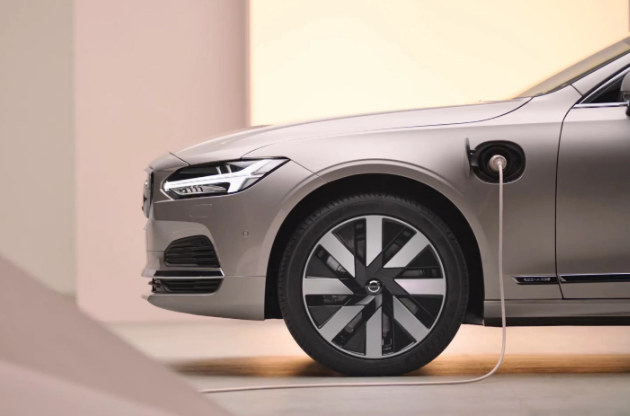
As Volvo prepares a formal response to the EX30 battery issue affecting over 10,000 UK vehicles, it’s worth noting that this isn’t the first time the brand has faced serious concerns over high‑voltage battery safety. Back in 2025, Volvo issued Recall R10312 covering more than 8,000 plug‑in hybrids across the S60, S90, V60, V90, XC60 and XC90 lines — all equipped with LG‑manufactured cell modules.
That recall stemmed from the risk of internal short circuits occurring when the battery was fully charged and parked. Volvo’s investigation found that certain LG cells could develop faults that increased the risk of fire, prompting a stop‑delivery order across North America and a diagnostic campaign to inspect and replace affected modules. While no injuries or driving incidents were reported, the scale of the action underscored how seriously Volvo treats battery integrity.
Fast forward to the EX30: this time, the issue involves Sunwoda‑supplied extended‑range packs, and while the defect appears different, the underlying theme is familiar — thermal instability and cell‑level risk when parked at high charge. Volvo has advised EX30 owners to cap charging at 70% until further notice, citing internal data that shows reduced risk below that threshold.
The comparison between the two recalls is striking. In both cases, the vehicles were parked, the batteries were fully charged, and the risk emerged not from driving stress but from latent cell behaviour. The EX30 situation is still unfolding, but the precedent set by the LG recall suggests that Volvo will likely pursue a similar path: VIN‑based diagnostics, software monitoring, and targeted module replacements where needed.
For owners, the takeaway is clear: battery safety isn’t just about range and performance — it’s about how cells behave when idle, charged, and exposed to ambient conditions. And for Volvo, the EX30 issue is a reminder that even with new suppliers and platforms, the challenges of high‑voltage battery management remain front and centre.
EX30 battery issue
Volvo has been here before. During the earlier recall involving LG‑supplied PHEV battery modules, the company didn’t automatically replace entire packs. Instead, retailers used a diagnostic process to check each car for cell‑level deviations. Vehicles that passed the test received a software update designed to monitor the battery more closely, while those showing abnormalities had the affected modules replaced rather than the full high‑voltage unit. It was a targeted, engineering‑led approach that balanced safety with practicality.
Given the similarities — both issues involving specific cells within larger packs, and both presenting risk when the vehicle is parked at high charge — it’s reasonable to expect Volvo may take a comparable route with the EX30. Until the investigation concludes, nothing is confirmed, but a strategy built around VIN‑based diagnostics, software monitoring, and module‑level replacement would align with how Volvo has handled battery defects in the past.
Read more about the EX30 battery notice below