
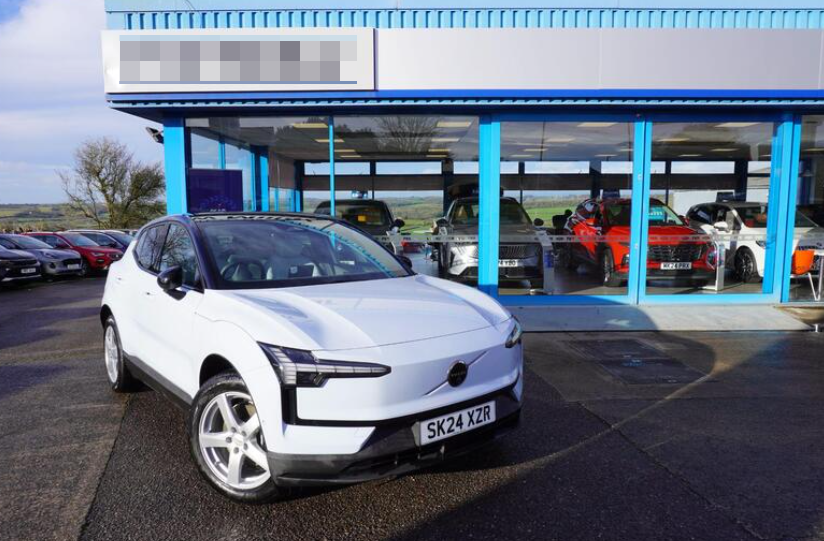
If you’re an EX30 owner stuck with a car that refuses to charge past 70%, you’re not being “fussy” or “impatient”. You’re dealing with a fault that cuts straight to the heart of what an EV is supposed to do. Range isn’t an optional extra — it’s the whole point of the thing.
And if your car is on PCP, you actually have more protection than you might think.
Yes, we’re very early out of the gate!
It’s worth saying that jumping straight to rejecting the car might be a bit hasty at this stage. We still don’t know the full extent of the issue, how long the charging limit will be in place, or what Volvo’s permanent fix will look like. For all we know, the solution could be straightforward and rolled out quickly. But while we’re waiting for clarity, it makes sense for owners to understand their rights and the options available to them. Knowing where you stand doesn’t mean you have to take action — it just means you’re prepared if the situation doesn’t improve.
If you’ve not already “read up” on the issue, then you should check out our article from yesterday.
Why this fault matters
A charging cap isn’t a cosmetic issue. It affects:
- How far you can drive
- How often you need to charge
- The value of the car
- Your confidence in the battery
- Your ability to use the car as advertised
If Volvo has imposed the limit because of a safety concern, that only strengthens your position. A car that can’t be safely charged to its stated capacity is not “satisfactory quality” under UK law. Namely, the Consumer Rights Act 2015
https://www.legislation.gov.uk/ukpga/2015/15/contents
Your rights when the car is on PCP
This is the part many people don’t realise:
Your contract is with the finance company, not the dealer.
That means:
- The finance company is responsible for supplying a car that works properly
- They must deal with faults
- They must arrange repairs or replacements
- And if things can’t be put right, they must accept a rejection
You’re not asking for a favour — you’re exercising your legal rights.
What you can do depends on how long you’ve had the car
Within the first 30 days
You can reject the car outright for a full refund. No repair attempts required.
Within the first 6 months
This is where most EX30 owners will fall.
- The law assumes the fault was there from day one
- The finance company gets one chance to fix it
- If the fix fails, takes too long, or isn’t reasonable, you can reject the car
- You’re entitled to a full refund of your deposit and payments
A permanent or open‑ended 70% charging cap is very unlikely to be considered a “reasonable” fix.
After 6 months
You can still reject the car, but you’ll need to show the fault was inherent. A manufacturer‑imposed charging limit is strong evidence of exactly that.
What your refund options look like
1. Full rejection and refund
You hand the car back, the PCP agreement is cancelled, and you get your money back. This is the cleanest route.
2. Replacement vehicle
You can ask for a replacement EX30 or a different model. You don’t have to accept one.
3. Price reduction
If you want to keep the car (most won’t), you can negotiate a partial refund.
How to start the process
Here’s the simplest way to approach it:
Step 1 — Tell the dealer and the finance company what’s happening
Explain that the car is capped at 70% and that this makes it unfit for purpose.
Step 2 — Put it in writing
A short, clear message is enough:
“I am rejecting the vehicle under the Consumer Rights Act 2015 due to an inherent fault affecting the high‑voltage battery system, which limits charging to 70%. The vehicle is not of satisfactory quality, not as described, and not fit for purpose.” – Scroll down for our email template.
Step 3 — Stop using the car
It avoids arguments later.
Step 4 — Follow the finance company’s complaints process
If they drag their feet, escalate to the Financial Ombudsman Service. It’s free, and they have a strong track record of siding with consumers in EV‑related disputes.
Why PCP gives you real leverage
Finance companies are regulated by the FCA, and they’re under pressure to handle complaints properly. They know that:
- The Ombudsman can overturn their decisions
- They’re responsible for the car, not the dealer
- A mishandled case can cost them far more later
That’s why PCP customers often get faster, cleaner resolutions than cash buyers.
Seek Proper Legal Advice
Most people can handle the early stages of a car rejection themselves — especially when the issue is as clear‑cut as a manufacturer‑imposed 70% charging limit. But if the finance company starts pushing back, delaying, or trying to minimise the problem, it’s worth getting proper legal advice. A solicitor who specialises in consumer or automotive disputes can look at your paperwork, the timeline of events, and the technical details of the fault, then tell you exactly where you stand. They’ll also spot things you might miss, like whether the dealer has already breached their obligations or whether the finance company has mishandled your complaint. You don’t need to jump straight into anything formal, but even a short consultation can give you clarity, confidence, and a clear plan for what to do next.
Email Template: Rejecting a Volvo EX30 Due to 70% Charging Limit (PCP Finance)
This email template is designed to give Volvo EX30 owners a clear, confident starting point when raising a complaint with their finance company about the new 70% charging limit. Not everyone knows how to phrase these things, and it’s easy to feel out of your depth when you’re dealing with a big lender, so the template lays out the key points in plain English and makes sure the important legal wording is included without turning it into a lecture. Owners can copy it as‑is or tweak it to suit their situation, but the aim is the same: help people communicate the issue clearly, assert their rights, and get the conversation moving in the right direction.
Subject: Volvo EX30 Charging Fault – Consumer Rights Act 2015
Dear [Finance Company Name] Team,
I am writing to raise a formal complaint regarding my Volvo EX30, registration [REG], purchased through a PCP agreement with you on [DATE].
The vehicle has developed a serious fault which now prevents it from charging beyond 70%. This is not a minor inconvenience — it significantly reduces the usable range of the car and affects my ability to use it as originally described and intended. Range is a core part of an electric vehicle’s functionality, and a manufacturer‑imposed charging cap fundamentally changes the nature of the product I agreed to finance.
Under the Consumer Rights Act 2015, a vehicle must be:
- of satisfactory quality
- fit for purpose
- as described at the point of sale
A car that cannot charge above 70% does not meet these requirements.
As my finance provider, you are legally responsible for ensuring the vehicle meets these standards. I am therefore asking you to take ownership of this issue and provide a clear resolution.
At this stage, I am requesting one of the following outcomes:
- A repair that fully restores the vehicle’s charging capability to its advertised specification, within a reasonable timeframe, or
- If this is not possible, or if the issue cannot be resolved satisfactorily, I wish to reject the vehicle under the Consumer Rights Act 2015 and have the finance agreement cancelled with a full refund of all payments made, including my deposit.
Please confirm the next steps and how you intend to resolve this matter. I would appreciate written acknowledgement of this complaint and a timeline for your investigation.
I look forward to your response.
Kind regards, [Your Name] [Address] [Contact Number] [Agreement Number]


Thanks for that. Why isn’t this a warranty issue direct? Can’t I ask Volvo for my money back if there are manufacturing defects?
I paid for a Volvo EX30 Plus AWD with cash and a £5000 deposit on my credit card. I have informed my credit card company that since the total purchase price exceeds £30,000 they are jointly and severally liable under Section 75A of the Consumer Credit Act 1974.
Under this legislation the bank is responsible, with the dealer, for the transaction and is liable for the full amount paid including the deposit plus any consequential expenses I incur while they are processing my claim.
Because the vehicle suffers from a hardware battery defect confirmed by a manufacturer safety advisory the bank is legally required to step in as the supplier has failed to provide a remedy.
I am also registering a vulnerability due to the safety risks and stress caused by this dispute which triggers the bank’s regulatory duty of care under the FCA Consumer Duty and Guidance FG21/1 to ensure a fair outcome without causing further harm.
My bank has made the process of reporting and declaring my intentions difficult due to the use of a portal that is badly designed and has a very clunky interface. I managed to get passed out and I’m now waiting for a reply. My aim is to get a speedy conclusion within a week. Section 25A, The FCA “Consumer Duty” (Principle 12) and The FCA Guidance on Vulnerable Customers (FG21/1) compels them to act almost immediately rather than making making you wait for 60 days.
It’s with them now I informed them yesterday.
Good thinking with the credit card deposit, unfortunately I paid mine in cash. Please update us how you get on David.
So, in the light of your more recent article, saying that the lack of a formal Recall Notice in the U.K. has left the legal situation in a more uncertain state, are you advising that PCP customers hold off sending this official “complaint” email? Should we be contacting the lease company (Volvo U.K. Finance in our case I believe) in any case to simply state that we note the unsatisfactory situation and wish to reserve our position?
I think you’re well justified to complain just be very careful about accepting any compensation. Their letter reads like it is drawing the line under the matter and could prevent any further action against them.
It’s now been officially recalled in the UK, although no resolution exists as yet.
Check your VIN at https://www.volvocars.com/uk/l/recall/
I’ve gone ahead and rejected my car, balls in the finance companies court now.
In addition to the original email / letter from Volvo UK I’ve now received another letter adding “don’t leave the car unattended while charging in a building or under cover” to the “don’t charge above 70%”.
As a result I can no longer charge my car at work as the charge points are in an underground carpark.
Not sure what you’re supposed to do if you ARE in attendance if your car catches fire whilst charging in a building, though… film it for posterity?
Going to see the dealer tomorrow and see if there are any updates. If not, it’s time to reject IMHO.
Any resolution is going to take months if they need to replace the batterie; sourcing them, training the technicians to replace them and all the ancillaries, scheduling the ‘repairs’ etc.